

Ahmed Kamel – Egypt Daily News
Washington’s next move comes into focus as Trump vows response to helicopter incident near Strait of Hormuz
A single helicopter may have just pushed the United States and Iran one step closer to a wider confrontation.
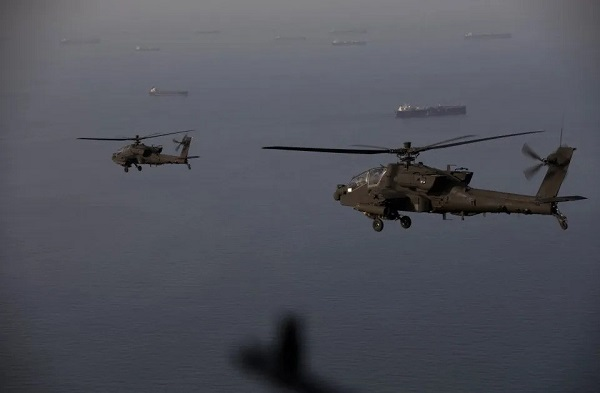
President Donald Trump on Tuesday publicly vowed that the United States would respond after an American Apache attack helicopter was shot down during operations near the Strait of Hormuz, an incident that could mark a significant turning point in the rapidly escalating conflict between Washington and Tehran.
The military significance of losing one aircraft is limited. The political significance is not.
For weeks, both sides have exchanged strikes, threats, and military pressure while leaving room for de-escalation. Trump’s latest statement narrows that space considerably. By declaring that a response is necessary, the president has effectively raised expectations that Washington will take visible action against Iran rather than absorb the incident and move on.
A conflict crosses a new threshold
According to U.S. officials, the helicopter went down while operating in waters near Oman. Both American crew members survived and were later recovered by a navy drone, avoiding what could have become a far more serious political and military crisis.
Yet the survival of the pilots may ultimately prove less important than the symbolism of the aircraft itself.
The Apache is one of the U.S. military’s most recognizable battlefield platforms and a cornerstone of Army aviation. Its loss represents the first confirmed destruction of such an aircraft since the current conflict began, providing Tehran with a potential propaganda victory while increasing pressure on Washington to demonstrate resolve.
Why the Strait of Hormuz matters
The location of the incident adds another layer of sensitivity.
The Strait of Hormuz remains one of the world’s most strategically important waterways, serving as a gateway for a large share of global energy exports. Any military confrontation in or around the narrow passage immediately attracts international attention because of its potential impact on oil supplies, shipping routes, and regional stability.
That reality means even relatively small military incidents can produce consequences far beyond the battlefield.
Trump’s challenge
Trump now faces a dilemma familiar to every American president involved in a Middle East confrontation.
Failing to respond could invite accusations of weakness from domestic political opponents and regional allies. Responding too aggressively, however, risks triggering another cycle of escalation with an adversary that has repeatedly shown its willingness to absorb military pressure while retaliating through its own network of capabilities and allies.
The president’s statement offered no indication of what form a U.S. response might take, but military planners are likely weighing a range of options, from limited strikes against specific targets to broader measures designed to reinforce deterrence.
The next 48 hours
Attention is now shifting away from the helicopter itself and toward Washington’s reaction.
Markets, regional governments, and military commanders across the Middle East will be watching closely for signs of impending action. The key question is no longer how the Apache was lost.
It is whether the incident becomes another episode in a contained conflict—or the event that pushes the United States and Iran into a more dangerous phase of confrontation.
