

Ahmed Kamel – Egypt Daily News
A senior Gulf official, involved in these discussions, estimated a roughly 50:50 chance of reaching a deal by Friday, citing the absence of input from the hardline Islamic Revolutionary Guard Corps (IRGC) in the Iranian delegation, which must endorse any agreement details. Trump’s positive outlook has seemingly caught Tehran off guard. According to Tasnim, a semi-official Iranian news agency, “an informed source” attributed delays to US interference and Trump’s threats.
Another source, Fars, echoed similar sentiments, accusing some US officials of sending mixed messages that complicate negotiations either directly or through regional allies. Concerns linger about potential prolonged disruptions by the US or regional entities affecting the negotiation process.
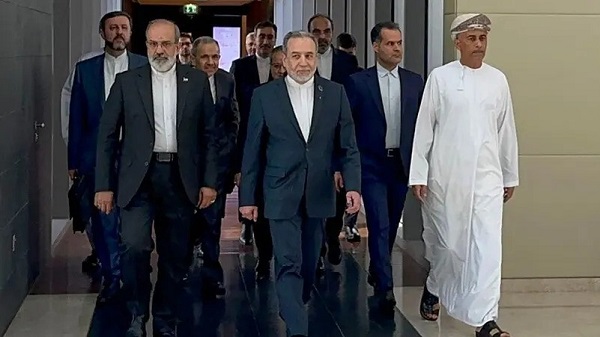
Iran insists that talks are solely with Oman and are concentrated on establishing a central corridor that would balance Iran’s entitlements with Oman’s considerations. The mention of “Iran’s rights” provokes numerous questions specifically proposals that could consolidate various routes through the strait, allowing Iran some degree of control contrary to US desires.
Current deliberations discuss different routes within the Strait of Hormuz. Iran has claimed certain paths running through its territorial waters. The United Nations’ International Maritime Organization (IMO) and Oman propose an alternative southern route; other vessels still traverse a central pre-war path despite inherent security risks.
According to Saeed Ajorlu from Iran’s negotiating team, they aim to form temporary agreements lasting between one and three months where Iran wields influence. Such Iranian dominance is unlikely to find favor in Washington or among Gulf states.
The discussions aim to transform separate routes, namely those through Omani and Iranian waters, into a single shared corridor benefiting both coastal nations. Baghaei from Iran’s Foreign Ministry emphasized maintaining a legal framework for the strait that avoids reverting to pre-war conditions where no single nation managed the shipping traffic.
Control over this key chokepoint holds almost as much significance for Tehran as its stance on nuclear enrichment rights. Regarding US perspectives on the strait, such control is deemed unacceptable both in Washington and among allies like Abu Dhabi and Riyadh. US Secretary of State Marco Rubio has repeatedly argued against state control over international waterways, contending it contravenes international law.
“Allowing a nation to regulate an international waterway,” he remarked recently, poses risks of establishing troublesome precedents with global repercussions. Despite Qatar’s assertion that negotiations are advancing, reconciling the disparate objectives and demands of both sides proves challenging. Questions remain about whether the Revolutionary Guards will relinquish some control over the Strait of Hormuz and under what conditions they might intercept vessels.
Considerations also include allowances for foreign naval ships’ access, particularly American ones, and whether Iran might demand details regarding vessel cargoes and destinations. Uncertainty persists around whether any agreement would lift the US blockade on Iranian ports, reintroduce waivers enabling Iranian oil exports, or revive elements of a US-Iran memorandum rendered obsolete shortly after its June signing.
