
Ahmed Kamel – Egypt Daily News
A senior Houthi official accused Egypt of declaring war on Yemen after the Egyptian parliament authorized President Abdel Fattah el-Sisi to take measures supporting Saudi Arabia’s defense. Mohammed Ali al-Houthi, a member of the Houthis’ political bureau, made the accusation in a statement posted overnight from Monday to Tuesday.
“It is truly remarkable that while these people go to discuss what they call ‘peace in the region,’ Egypt and its parliament declare support for the so-called defense of the Kingdom of Saudi Arabia, and in doing so, declare war against the Republic of Yemen,” al-Houthi said.
His remarks followed a closed-door parliamentary vote on Monday approving a mandate for President el-Sisi to support Saudi Arabia in defending its territory and sovereignty against external aggression. The parliament said the approval had secured the required two-thirds majority, but did not publish an exact tally. The vote authorized the president to take action; it did not itself announce that Egyptian forces had been deployed.
Cairo has described any potential assistance as defensive. President El-Sisi has said Egypt would support the defense of Saudi territory and borders, not launch an attack on Yemen. The precise form, scale and duration of any Egyptian contribution have not been publicly specified, and no formal Saudi request for a deployment had been announced.
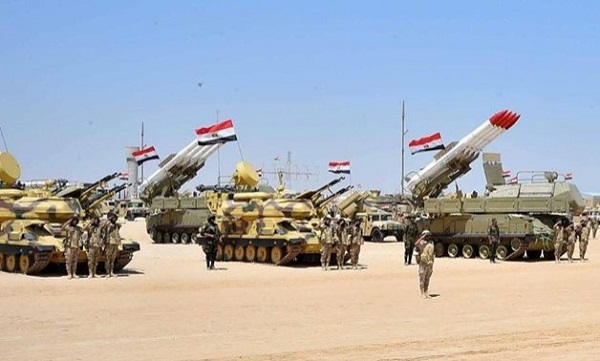
A regional official briefed on the matter told the Associated Press that Egypt intended to provide air-defense systems and aircraft to help intercept missiles and drones directed at Saudi Arabia. The official said the assistance would not include Egyptian ground forces entering Yemen. The Egyptian government has not publicly confirmed those specific details.
The authorization has nonetheless prompted concern in Egypt about the possibility of becoming more directly involved in Yemen’s conflict. The Egyptian Social Democratic Party said its parliamentary bloc would abstain, citing a lack of information about the mission’s objectives, scope, duration and cost, as well as potential risks to Egyptian personnel. The party called for diplomacy to take priority and warned against an open-ended military commitment.
Egypt’s parliament held discussions before approving the mandate, with the measure debated in closed sessions. The decision followed a request from President el-Sisi and a pledge by the National Defense Council to provide Saudi Arabia with necessary and possible support. While the parliamentary authorization clears a legal and political hurdle for the president, it leaves key operational questions unanswered.
The political stakes are heightened by the recent escalation of Houthi attacks against Saudi Arabia. The group has launched missiles and drones toward the kingdom, while Saudi defenses have intercepted some of the projectiles. Saudi Arabia has also carried out strikes against Houthi-controlled areas in Yemen. The growing exchange has increased concern that the conflict could draw additional regional actors into direct military involvement.
The Houthis’ criticism also came as Saudi Arabia’s defense minister, Khalid bin Salman, met in Tehran with senior officials from Pakistan and Turkey. The talks, hosted by Iran, were presented as an effort to discuss regional security and reduce tensions. Al-Houthi contrasted those diplomatic discussions with Egypt’s decision to authorize support for Saudi Arabia, arguing that Cairo’s move undermined the stated effort to de-escalate.
The gathering in Tehran brought together representatives of Saudi Arabia, Pakistan and Turkey with Iranian officials, including President Masoud Pezeshkian. The talks involved countries with different positions in the region’s security disputes. The fact that the meeting took place alongside the Houthi warning underscores the difficulty of separating diplomatic initiatives from the military developments unfolding across the region.
Egypt’s decision also carries historical weight. The country intervened in Yemen during the 1960s civil war, sending large numbers of troops in support of republican forces. That campaign became costly and remains a source of caution in Egyptian debates about military involvement there. In 2015, Egypt joined the Saudi-led coalition against the Houthis primarily as a naval partner, contributing to efforts to secure Red Sea shipping lanes.
For Cairo, Saudi Arabia is a close political and economic partner, and the security of the kingdom is linked to wider concerns about regional stability and maritime routes. Houthi attacks and the broader conflict could also affect shipping through the Red Sea, an important corridor for trade and for Egypt’s Suez Canal revenues.
Al-Houthi’s statement is a political warning, not evidence that Egypt has formally declared war or begun military operations in Yemen. The Egyptian mandate is framed by Cairo as support for Saudi defense, but its practical consequences will depend on whether Riyadh requests assistance and what steps the Egyptian president chooses to take. Until those details are clarified, the authorization is likely to remain a focus of debate in Egypt and a source of tension with the Houthis.
