

Ahmed Kamel – Egypt Daily News
Egyptian Foreign Minister Badr Abdelatty held a series of meetings with senior diplomats from BRICS members and partner countries on the sidelines of the group’s 18th summit in New Delhi, using the discussions to press for stronger international efforts to contain regional tensions.
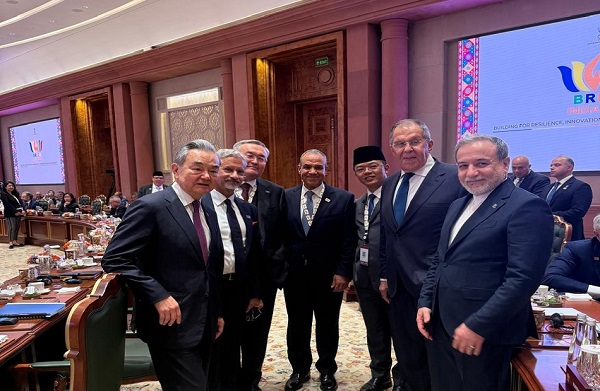
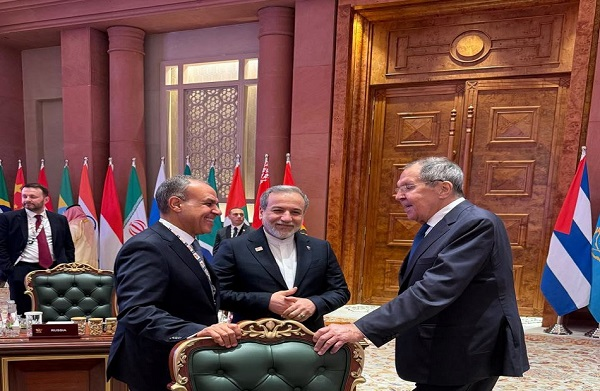
Abdelatty met with China’s Foreign Minister Wang Yi, Russia’s Foreign Minister Sergey Lavrov, Iranian Foreign Minister Abbas Araghchi, Indonesian Foreign Minister Sugiono, Kazakhstan’s Foreign Minister Mukhtar Tleuberdi and Indian Foreign Minister Subrahmanyam Jaishankar.
The meetings brought together representatives of countries with significant political and economic influence across Asia, Africa and the wider developing world. Discussions focused on regional crises, international security and the role of BRICS in supporting cooperation among countries of the Global South.
According to Egypt’s Foreign Ministry, the officials exchanged assessments of rapidly changing developments in the region and emphasized the need to prevent existing tensions from escalating into broader conflicts. They also highlighted the importance of sustained communication and diplomatic consultation as a means of reducing risks and protecting shared interests.
Abdelatty presented Egypt’s position that political and diplomatic solutions should remain the primary tools for addressing regional disputes. He called for intensified international contacts aimed at stopping escalation and creating conditions for negotiated settlements to ongoing crises.
The Egyptian minister also stressed the importance of protecting maritime security. Instability around major shipping routes has created growing concerns over the movement of commercial vessels, the cost of transportation and the reliability of international supply chains.
Egypt has a direct interest in the issue because the Suez Canal is one of the world’s most important maritime corridors. Any disruption affecting shipping lanes in the Middle East can influence traffic through the canal, delay deliveries and increase the price of energy and essential goods.
During his discussions, Abdelatty called for measures to preserve freedom of navigation, safeguard commercial shipping and maintain the regular flow of goods. He argued that regional security and the stability of global trade were closely connected and should be treated as shared international priorities.
The foreign minister held separate talks with Lavrov and Araghchi, during which the three officials examined the latest regional developments and the possibility of preventing further deterioration. Abdelatty urged both Russia and Iran to support efforts aimed at reducing tensions and encouraging diplomatic engagement.
His meeting with Araghchi placed particular emphasis on the security of Gulf countries. Abdelatty underlined Egypt’s opposition to attacks against Arab Gulf states and stressed that regional stability required respect for the sovereignty and security of all countries.
The message came at a sensitive moment, as military confrontations and attacks on infrastructure have increased concerns about the possibility of a wider regional conflict. Egypt has sought to maintain contact with competing regional and international actors while presenting itself as a diplomatic channel capable of supporting dialogue.
The discussions also addressed the future role of BRICS. Egypt joined the grouping in January 2024 and has participated in its summit meetings since then. Cairo views the organization as an important platform for strengthening cooperation among developing countries and advocating reforms in global institutions.
Abdelatty and his counterparts discussed the need to make BRICS more effective in promoting economic coordination, development and dialogue among nations of the Global South. They also supported efforts to encourage a more balanced international system that better reflects the interests of developing and emerging economies.
For Egypt, BRICS offers opportunities to expand trade, investment and diplomatic partnerships beyond traditional alliances. The grouping also provides a forum for discussing food security, energy, infrastructure, technology and the reform of international financial institutions.
Egyptian officials have consistently argued that developing countries should have a stronger voice in decisions affecting the global economy and international peace. Abdelatty’s meetings reflected that approach, combining immediate calls for de-escalation with longer-term proposals for greater cooperation among BRICS members and partner states.
India’s hosting of the summit created an opportunity for Egypt to hold multiple diplomatic consultations in a single setting. The meetings allowed Cairo to discuss regional security directly with governments that have different relationships with the countries involved in current conflicts.
The series of talks underscored Egypt’s effort to use diplomacy to limit the spread of regional crises. By maintaining communication with China, Russia, Iran, India and other BRICS participants, Cairo is seeking support for a broader approach centered on restraint, secure trade routes and political negotiations.
Abdelatty’s engagements also demonstrated that Egypt’s foreign policy priorities extend beyond immediate regional concerns. Cairo is attempting to link regional stability with international economic security, arguing that peace, maritime safety and uninterrupted supply chains are essential to sustainable development.
