

Ahmed Kamel – Egypt Daily News
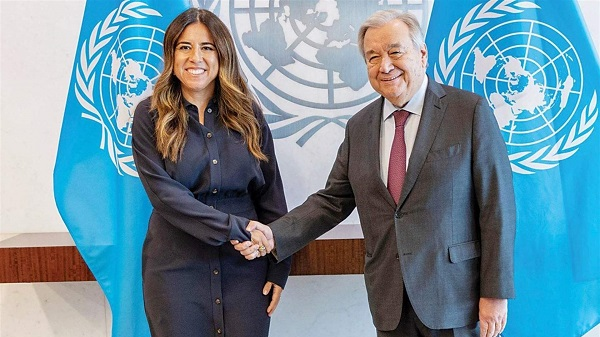
Egypt supports the nomination of Emirati diplomat Lana Zaki Nusseibeh to become the next secretary-general of the United Nations, an informed source said Monday. Cairo’s backing reflects its close relationship with the United Arab Emirates and its interest in strengthening Arab representation in international institutions, the source said.
The source cited Nusseibeh’s diplomatic experience, international work and contributions to multilateral diplomacy. Egypt believes her knowledge of international peace and security could help advance the UN’s objectives and bolster confidence in the multilateral system, the source added.
The endorsement places Egypt among the governments supporting the UAE’s nominee as the selection process for the UN’s next chief takes shape. Nusseibeh’s candidacy has also been discussed by Egyptian and Emirati officials. In a separate conversation on Monday, Egyptian Foreign Minister Badr Abdelatty and his Emirati counterpart, Sheikh Abdullah bin Zayed Al Nahyan, discussed bilateral relations, regional developments and the UAE nomination.
Abdelatty praised Nusseibeh’s experience in multilateral diplomacy and described her nomination as a source of pride in light of the close ties between Egypt and the UAE. He also highlighted that she is the first Arab woman nominated for the post, according to Egypt’s Foreign Ministry.
The secretary-general leads the UN Secretariat and serves as the organization’s chief administrative officer, while also carrying a prominent diplomatic role. The appointment is made by the General Assembly on the recommendation of the Security Council. A candidate therefore needs support from the council’s members, including its five permanent members, before the General Assembly confirms the choice.
Nusseibeh has held senior diplomatic positions for the UAE, including serving as the country’s permanent representative to the United Nations in New York from 2013 to 2024. She has also served as an assistant minister of foreign affairs for political affairs. Her experience at the UN and in UAE foreign policy is central to the arguments made by supporters of her candidacy.
Egypt’s public support is framed both as recognition of those qualifications and as part of its relationship with Abu Dhabi. The source said Egypt’s close ties with the UAE made it important to support its partner in international forums. The two countries, the source added, hope to strengthen Arab representation and advance regional interests through cooperation.
The endorsement comes amid broader regional tensions that also featured in the foreign ministers’ discussion. Abdelatty and Sheikh Abdullah addressed rising military tensions in the Middle East and the need to prevent further escalation through diplomatic efforts. Their conversation linked the nomination to a wider agenda of bilateral and regional cooperation, rather than treating it as an isolated personnel matter.
Nusseibeh’s candidacy is not an appointment, and Egypt’s endorsement alone does not determine the outcome. The Security Council’s recommendation is a decisive stage in the process, where the permanent members can exercise veto power. The General Assembly then formally appoints the secretary-general.
Her nomination has drawn support from other quarters, including the Gulf Cooperation Council, which has endorsed the UAE’s nominee, according to reporting on the campaign. At the same time, the selection process remains competitive: several other candidates have been discussed, and informal consultations among Security Council members are an important part of determining which contender can secure the necessary backing.
Egypt’s statement signals that Cairo intends to support Nusseibeh as the process moves forward. It also underscores how the contest for the UN’s top post intersects with diplomatic relationships and regional representation. For Egypt and the UAE, backing the same candidate offers an opportunity to present a coordinated position in a major international selection.
Whether that support translates into the Security Council recommendation required for appointment remains to be seen. For now, Egypt has made its position clear: it sees Nusseibeh’s diplomatic record and knowledge of multilateral affairs as assets for the UN, while viewing her candidacy as an opportunity to strengthen Arab participation in international leadership.
