

Ahmed Kamel – Egypt Daily News
Archaeologists have uncovered a long-lost sacred lake inside the sprawling Karnak Temple Complex in one of the most significant Egyptian archaeological discoveries in recent years, revealing new secrets about the spiritual rituals and religious life of ancient Egypt after the site remained buried beneath sand and rubble for millennia.
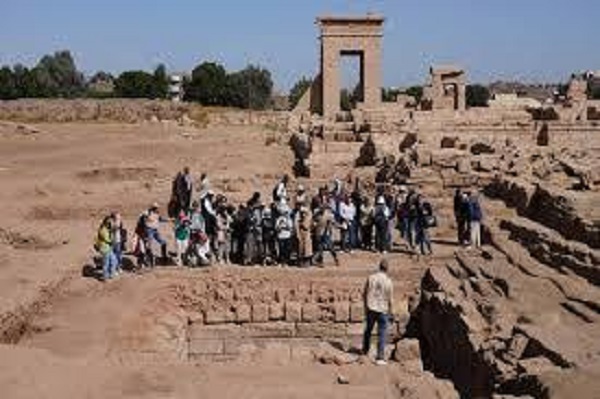
The discovery was made within the precinct of the ancient Montu Temple by a joint Egyptian-Chinese archaeological mission following eight years of painstaking excavation work that transformed what researchers described as a massive mound of dust and debris into one of the most remarkable finds ever linked to sacred lakes in Egyptian history.
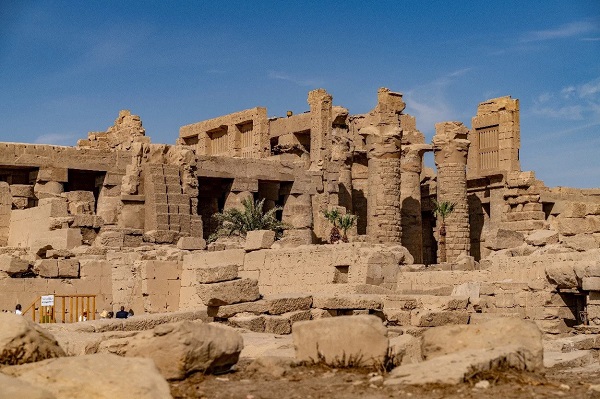
The man-made reservoir, spanning more than 50 square meters, is believed to have played a central role in purification ceremonies and temple rituals carried out by priests thousands of years ago. Archaeologists say the structure remains exceptionally well preserved, with its carefully engineered design offering unprecedented insight into the architectural sophistication of ancient Egyptian religious sites.
According to the excavation team, the discovery marks the first time a sacred lake in Egypt has undergone full systematic scientific excavation, opening the door to an entirely new understanding of how these mysterious ritual reservoirs functioned within temple life.
Chinese Academy of Social Sciences and Egypt’s Ministry of Tourism and Antiquities jointly supervised the mission, which archaeologists say could reshape scholarly understanding of ritual purification practices in ancient Thebes.
Jia Xiaobing, head of the archaeological mission, described the lake as an extraordinary breakthrough, saying it provides researchers with “a wealth of first-hand materials” for studying sacred lakes and their role in ancient Egyptian worship.
Egyptian archaeologist Hend Aly, a senior inspector at the Montu Temple, said the discovery crowned nearly a decade of relentless work by the joint team, recalling that excavations initially began in what appeared to be nothing more than an enormous accumulation of sand and destruction layers.
Sacred lakes occupied a vital role in Egyptian temples and were regarded as holy spaces connected to purification, offerings, and communication with the gods. Unlike ordinary water sources, these reservoirs were considered spiritually charged and formed an essential part of temple architecture and ceremonial life.
The newly uncovered lake inside the Karnak complex is expected to provide historians with crucial evidence about how water rituals were integrated into Egypt’s religious traditions, especially within the worship practices associated with the god Montu and later Theban cults.
Beyond the lake itself, archaeologists also uncovered a series of major artifacts across the temple precinct, including reused stone blocks linked to rulers from Egypt’s Late Period, cow jaw remains believed to have ritual significance, and relics associated with royal women who served as divine adoratrices of the god Amun.
Excavations within the Osirian chapel area also led to the discovery of three chapels dedicated to Osiris, alongside dozens of statuettes and religious fragments dating back to the 25th and 26th Dynasties, shedding further light on the complex religious landscape of ancient Thebes.
Archaeologists believe the findings represent the beginning of a new phase of exploration inside the Karnak Temple Complex, with ongoing excavations expected to reveal even more information about the relationship between ritual, power, and sacred architecture in ancient Egyptian civilization.
The discovery also highlights the growing importance of international cooperation in archaeology, as Egyptian and Chinese researchers continue working side by side to uncover hidden chapters of Egypt’s ancient past buried beneath the temples of Luxor.
