

Ahmed Kamel – Egypt Daily News
Egyptian authorities have moved swiftly to clamp down on unlicensed addiction and psychiatric treatment facilities following a series of deadly incidents that have reignited concerns over safety and oversight in the country’s private healthcare sector.
On Wednesday, the Ministry of Health and Population announced the closure of 32 unlicensed treatment centers across four governorates, describing the move as part of a nationwide campaign to eliminate illegal medical facilities and protect patients’ lives. The closures were carried out in Alexandria, Sharqia, Beheira, and Dakahlia after coordinated inspection campaigns involving local health directorates, the General Secretariat of Mental Health, and the Interior Ministry’s Anti-Narcotics Administration.
According to the ministry, inspection teams found that the centers were operating without official licenses and in violation of laws governing private medical facilities and mental health services. Officials cited a range of serious violations, including the absence of qualified technical directors, poor infection-control measures, inadequate medical equipment, unsafe handling of hazardous waste, and incomplete or missing patient records.
In Alexandria, eight centers were shut down in the Abu Talat and Agami districts. In Sharqia governorate, inspectors closed 11 centers in the Tenth of Ramadan City. Additional closures were reported in Abu Talat and the King area of Alexandria, as well as in the city of Damanhour in Beheira governorate.
In Dakahlia, inspection teams reviewed two licensed facilities in Mansoura and Talkha. While these centers were not closed, legal reports were filed against Al-Naqaa Psychiatric and Addiction Treatment Center and Delta Psychiatric and Addiction Treatment Center for medication-related violations. Both were given a 15-day deadline to rectify their status. Health Ministry spokesperson Hossam Abdel Ghaffar said legal measures had been taken against all violating facilities and stressed that inspection campaigns would continue nationwide.
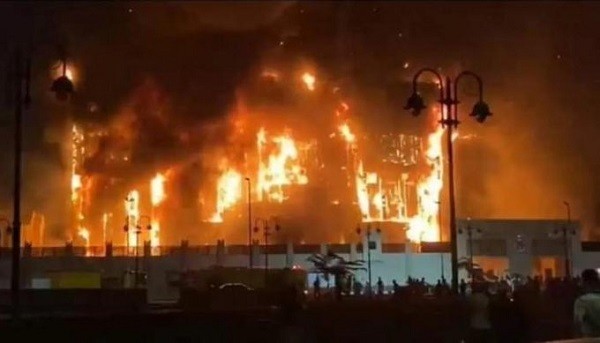
The crackdown follows a catastrophic fire earlier this week at an unlicensed addiction treatment center in the city of Banha, north of Cairo, which killed seven people and injured six others. The Public Prosecution has launched an investigation into the incident, confirming that the facility was operating without the required permits.
Civil defense forces rushed to the scene, deploying ten ambulances and three fire engines. Firefighters managed to contain the blaze and prevent it from spreading to neighboring buildings. Victims’ bodies were transferred to the morgue at Banha Teaching Hospital, while the injured were taken to the same hospital for treatment.
Security services filed an official report on the incident, and prosecutors ordered a forensic inspection of the site to determine the cause of the fire. While investigations are ongoing, local media quoted eyewitnesses as suggesting that a natural gas leak may have triggered the blaze, which spread rapidly through the building.
The Banha tragedy is the latest in a series of incidents highlighting the dangers posed by unregulated addiction treatment centers. In previous cases, patients have fled facilities in Giza after reporting severe abuse and unlawful detention inside villas operating illegally as rehabilitation centers beyond any formal oversight.
Egyptian authorities have long warned of the grave risks associated with unlicensed addiction and mental health centers, citing unsafe accommodation conditions, the absence of qualified medical staff, weak infection-control protocols, and a lack of emergency response systems. However, the scale of the problem remains difficult to quantify. There is no official national registry of such centers, with authorities relying instead on the results of periodic inspection campaigns.
Health officials say many of these facilities operate out of apartments, villas, or farms, presenting themselves as rehabilitation homes or psychological support centers to evade scrutiny. The problem is compounded by the tendency of some shut-down centers to reopen under new names, as well as the absence of a unified central database, making sustained enforcement challenging.
The latest closures signal a renewed determination by the authorities to tighten oversight in the wake of public outcry over patient safety. Whether the campaign will lead to lasting reform, including stronger monitoring mechanisms and clearer accountability, remains a key question as investigations into the Banha fire continue.
