

Ahmed Kamel – Egypt Daily News
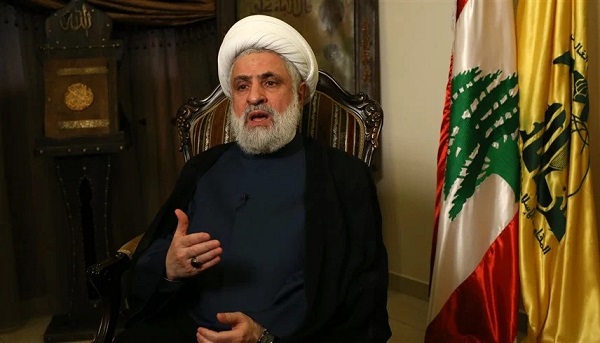
Hezbollah Secretary-General Naim Qassem has firmly rejected calls to disarm the Lebanese group, describing such demands as part of an “Israeli-American project” that undermines Lebanon’s sovereignty and security. His remarks come amid mounting international pressure on Beirut and continued Israeli military operations in southern Lebanon, despite a ceasefire agreement reached late last year.
Speaking on Sunday in a televised address during a party event, Qassem said that calls to restrict weapons exclusively to the Lebanese state, often framed as a step toward stability ignore what he described as Israel’s ongoing violations of the ceasefire and Washington’s growing political influence over Lebanese decision-making.
“To ask for the monopoly of weapons at a time when Israel continues its aggression and the United States imposes guardianship over Lebanon means stripping the country of its sources of strength,” Qassem said. “This does not serve Lebanon’s interests; it serves what Israel wants.”
His comments follow the Lebanese government’s approval of a plan to dismantle Hezbollah’s military infrastructure and disarm the group by the end of the year in areas stretching from the Israeli border to the Litani River, about 30 kilometers to the north. The plan was adopted under intense US pressure and amid fears that Israel could escalate its strikes if no action were taken.
A Fragile Ceasefire Under Strain
The ceasefire that ended more than a year of intense fighting between Israel and Hezbollah came into effect in November 2024. Under the agreement, the Lebanese army was to deploy in border areas in southern Lebanon, while Israel was expected to halt its military operations and withdraw from Lebanese territory.
However, Qassem accused Israel of failing to honor its commitments, citing what he described as more than 10,000 violations of the agreement, including airstrikes, killings, and widespread destruction.
“With Israel refusing to implement any step of the agreement and continuing its aggression, nothing more can be asked of Lebanon,” he said. “Do not ask us for anything anymore. The Lebanese state is not required to act as a police force for Israel. The aggression must stop.”
Israel has continued to carry out airstrikes across various parts of Lebanon, saying the attacks are aimed at preventing Hezbollah from rebuilding its military capabilities after sustaining significant losses during the war. Lebanese officials and Hezbollah, however, argue that these strikes violate the ceasefire and further destabilize the country.
Dispute Over the Scope of Disarmament
Israel currently maintains five strategic positions inside Lebanese territory, a point of contention in ongoing discussions about security arrangements in the south. Hezbollah insists that the ceasefire agreement applies only to areas south of the Litani River and does not require the group to surrender its weapons elsewhere.
The Lebanese army, tasked with implementing the government’s plan, has taken a cautious approach. Army commander General Rodolphe Haykal said on Tuesday that the military is close to completing the first phase of its deployment plan and is carefully assessing and planning subsequent stages.
“We are proceeding with evaluation, study, and planning with precision and caution for the next phases,” Haykal said, without providing further details.
A Broader Political Standoff
The dispute over Hezbollah’s weapons reflects deeper divisions within Lebanon, where the group is viewed by supporters as a deterrent against Israel and by critics as a parallel military force that weakens the state and exposes the country to conflict.
As Israel’s strikes continue and diplomatic pressure intensifies, Lebanon finds itself caught between competing demands: calls for full state control over arms on one hand, and Hezbollah’s insistence that disarmament cannot take place while Israeli forces remain on Lebanese soil and military operations persist.
For now, the standoff appears far from resolution. With the ceasefire under strain and regional tensions still high, the question of Hezbollah’s weapons remains one of the most contentious and defining issues in Lebanon’s fragile political and security landscape.
