

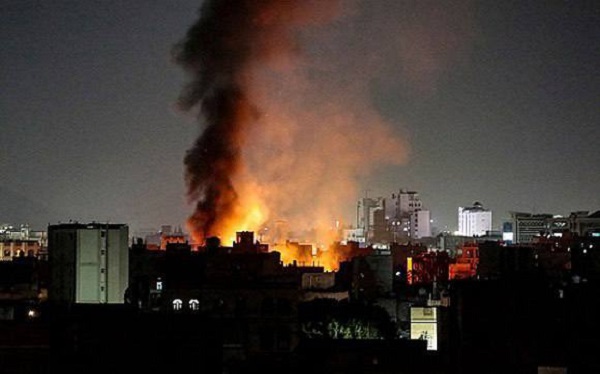
Egypt Daily News – Tensions in the Middle East escalated sharply early Monday as the Israeli military launched a wave of airstrikes on key port infrastructure in Yemen controlled by the Houthi movement. In retaliation, the Houthis fired two missiles toward Israel, triggering air raid sirens across several areas.
According to an official Israeli statement, the air force dropped approximately 60 bombs on multiple sites in western Yemen, including the ports of Hudaydah, Ras Isa, and Al-Salif, as well as the Ras Kathib power station. The strikes were part of what the Israeli Defense Ministry is calling “Operation Black Flag.” Defense Minister Yisrael Katz vowed that the Houthis would “pay a heavy price.”
Israel claims the targeted ports are being used to smuggle weapons from Iran to the Houthis, which the group allegedly deploys in operations against Israel and its allies in the region. Among the targets was the cargo ship Galaxy Leader, held by the Houthis since November 2023. Israel accuses the group of converting the vessel into a maritime radar platform to monitor Red Sea shipping.
In response, Yemen’s Houthi-led Ansar Allah movement launched two ballistic missiles toward Israeli territory. The Israeli army confirmed that its air defense systems engaged the projectiles and that an investigation is underway to assess the interception’s effectiveness.
Reacting to the events, the deputy head of the Houthi media authority declared, “Gaza is not alone, and Yemen does not sleep on humiliation,” adding that “those who attack Gaza and Yemen will not enjoy peace.”
Red Sea Ship Attack Adds to Rising Tensions
The flare-up followed a separate maritime assault on Sunday, when gunmen attacked a Liberian-flagged vessel off Yemen’s southwestern coast. The ship caught fire and began taking on water, forcing the crew to abandon it. According to the UK Maritime Trade Operations (UKMTO) and security firm Ambrey, eight small boats armed with rocket-propelled grenades and light weapons were used in the attack, which took place roughly 94 kilometers from Hudaydah port.
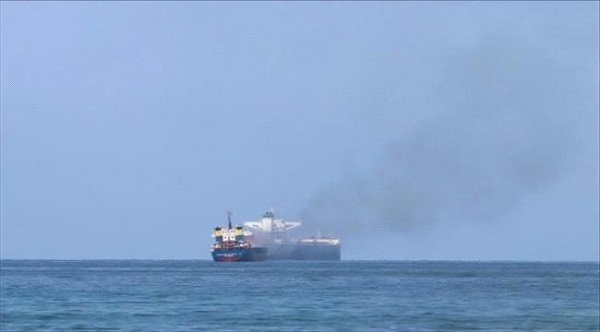
International reports indicate that the Houthis have carried out more than 100 attacks on commercial ships since November 2023. These incidents have sunk two vessels, led to the capture of a third, and caused the deaths of at least four crew members. As a result, global shipping routes have been severely affected, with many companies opting to avoid the Red Sea and Suez Canal, a key artery for roughly 12% of global maritime trade and rerouting vessels around the Cape of Good Hope despite the increased cost and transit time.
Escalation Amid Fragile Ceasefire Prospects and Nuclear Uncertainty
The renewed violence comes at a particularly delicate moment in the region. A potential ceasefire deal between Israel and Hamas hangs in the balance, while questions loom over Iran’s intentions to resume nuclear negotiations following U.S. airstrikes on its sensitive military facilities in the context of ongoing hostilities with Israel.
Amid these regional developments, Israeli Prime Minister Benjamin Netanyahu has traveled to Washington for a high-stakes meeting with U.S. President Donald Trump.
The United States, which has launched multiple airstrikes against Houthi positions since early 2024, had suspended its military operations in Yemen this past May. That decision followed an agreement brokered by Oman, under which both sides pledged to refrain from targeting each other’s ships in the Red Sea and Bab el-Mandeb Strait.
