


Ahmed Kamel – Egypt Daily News
In the heart of Cairo, where traffic hums and streets pulse with life, the aroma of lentils, rice and fried onions drifts from small eateries and street corners alike. Behind one such counter, 52-year-old Mustafa Aboul-Fotouh works with practiced calm, assembling plates of koshary, a dish so simple in appearance yet so deeply woven into Egypt’s cultural fabric that it has now earned global recognition.
This week, koshary was officially inscribed on UNESCO’s Representative List of the Intangible Cultural Heritage of Humanity for 2025, marking the first time an Egyptian dish has received the designation. For Aboul-Fotouh, whose family has prepared the dish for generations, the honour represents more than culinary success.

“My father taught me that we’re not just serving food,” he says as he layers rice, lentils, macaroni and tomato sauce with deliberate care. “We’re preserving a part of Egypt’s social fabric.”
Often described as the country’s unofficial national dish, koshary is a meal of remarkable inclusivity. Affordable, filling and widely available, it transcends class, profession and background. “Koshary is the meal of equality,” Aboul-Fotouh explains. “Here, your wallet doesn’t matter. Everyone is simply Egyptian.”
The dish’s history mirrors Egypt’s own layered past. Its base of rice and lentils is believed to trace back to khichdi, introduced during the 19th-century British presence in Egypt. Italian immigrants later added macaroni and tomato sauce, while Egyptians perfected the dish with crispy fried onions, garlic-infused vinegar and spicy sauce. Over time, these influences fused into a uniquely Egyptian creation humble, adaptable and unmistakably local.
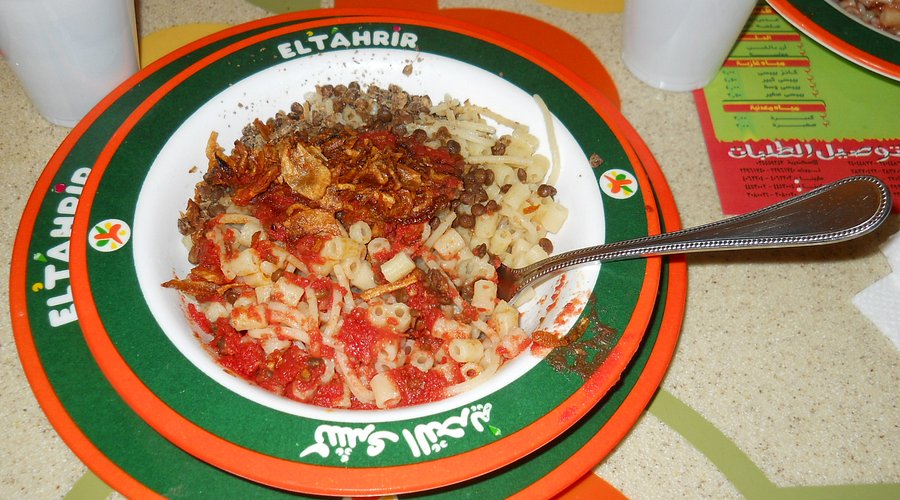
UNESCO’s recognition elevates what many Egyptians have always known: that koshary is more than street food. It is a daily ritual, a shared experience and a living archive of history shaped by migration, colonial encounters and urban life.
For those lining up at Aboul-Fotouh’s restaurant, the designation brings a sense of pride to an everyday meal. Ahmed Ali, a 35-year-old construction worker stopping by for lunch, calls koshary his “engine.”
“It’s hot, cheap, and perfectly balanced,” he says. “It gives me the energy I need for physical work. I’m proud that the food we eat every day is now part of world heritage.”
Younger generations see koshary as both comfort and connection. “It’s our go-to meal when we’re hanging out with friends,” says Yara Sami, a 21-year-old university student. “It’s traditional, affordable, and familiar. UNESCO recognition feels like validation of popular Egyptian culture, not just elite heritage.”
Each plate tells a quiet story of resilience, adaptation and community. It requires no ceremony, no explanation. It simply asks to be eaten and shared. In its perfectly balanced layers, history is not displayed behind glass or preserved in stone, but tasted, remembered and passed on.
“It’s amazing that something so simple can carry so much meaning,” Sami says, stirring her fork through the familiar mix.
In recognising koshary, UNESCO has acknowledged not only a dish, but a living tradition, one that continues to nourish millions, both physically and culturally, every single day.
