

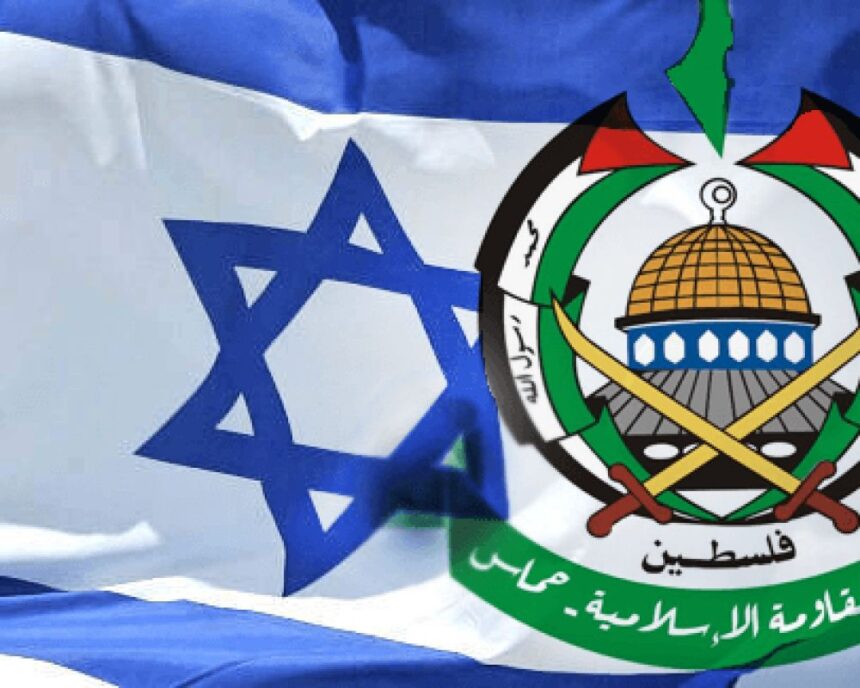
Egypt Daily News – Doha-hosted negotiations aimed at reaching a ceasefire in Gaza ended in failure this week, with both the U.S. and Israeli delegations withdrawing from the talks, citing a lack of progress and accusing Hamas of negotiating in bad faith. The collapse of the discussions triggered sharp criticism from U.S. President Donald Trump, who publicly condemned Hamas for what he described as obstructionist tactics.
Speaking to CNN, a senior Hamas official outlined the group’s perspective on why the talks broke down. He pointed to two major sticking points: the exchange of prisoners and the schedule for Israel’s military withdrawal from the Gaza Strip.
Hamas’ Two Proposals
According to the Hamas official, the group had tabled two proposals addressing these core issues before the U.S. and Israeli teams exited the negotiations on Thursday. The first proposal involved a complex prisoner exchange deal. Hamas offered to release 10 Israeli hostages alive in exchange for 200 Palestinian prisoners serving life sentences, along with 2,000 additional detainees from Gaza, whose identities would be selected by Hamas.
Furthermore, for every Israeli hostage returned, Hamas requested that Israel hand over the remains of 10 deceased Palestinians, plus 50 Palestinian prisoners captured after October 7, including women and minors under the age of 18, again chosen by Hamas.
The second proposal centered on a phased Israeli withdrawal. Hamas suggested that Israeli forces pull back 1,000 meters from uninhabited areas in northeast Gaza and 800 meters from populated areas. In Rafah, in the southern part of the Strip, the proposed withdrawal distance ranged from 700 to 1,200 meters depending on the specific urban area.
Crucially, the proposal called for a gradual Israeli retreat from the Philadelphia Corridor—a narrow strip of land near the Egyptian border in southwest Rafah—at a rate of 50 meters per week. Full withdrawal from the corridor would occur by day 50 under this plan.
U.S. and Israeli Withdrawal from Talks
After Hamas presented these proposals, both the Israeli and American delegations pulled out of the talks. A spokesperson for Israel’s Ministry of Foreign Affairs said Israel had already accepted the U.S.-backed framework for a ceasefire and hostage release, but that Hamas had “hardened its stance” and even backtracked on previous points of agreement.
President Trump, in strongly worded remarks, accused Hamas of intentionally sabotaging the negotiations. “Hamas clearly does not want a deal to end the war and release hostages,” he said. “Their refusal to cooperate shows it’s time to finish the job and eliminate the organization.”
Israeli Prime Minister Benjamin Netanyahu echoed that sentiment, saying his government was now considering “alternative options” to retrieve the remaining hostages and bring an end to Hamas’ control over Gaza.
Steve Witkoff, the U.S. envoy to the Middle East, confirmed Thursday that the Trump administration had recalled its negotiating team for consultations in Washington following Hamas’ latest response. “It’s now obvious they are not serious about a ceasefire,” Witkoff said.
Hamas Responds to Accusations
In a formal statement, Hamas expressed “surprise” at the U.S. decision to withdraw and rejected accusations of intransigence. “From the beginning, we have approached the negotiations with national responsibility and considerable flexibility, aiming to reach a deal that ends the aggression and relieves the suffering of our people in Gaza,” the group said.
Hamas senior official Bassem Naim also criticized the sudden halt in talks. “Just days ago, Witkoff said we were close to a breakthrough, having agreed on three out of four points,” Naim stated. “What we proposed was serious and could have led to an agreement—if Israel was truly interested.”
Egypt and Qatar Press On
Despite the collapse of the current round of negotiations, Egypt and Qatar, the primary mediators in the talks, have pledged to continue working toward a permanent ceasefire. In a joint statement, the two countries described the breakdown as “a normal development in the context of such complex negotiations” and stressed their commitment to resuming dialogue.
The collapse of the Doha talks has once again underscored the profound mistrust between the parties, the complexity of demands on both sides, and the fragile nature of any potential truce. As the humanitarian crisis in Gaza deepens and diplomatic efforts stall, the path to peace appears more elusive than ever.
