

Ahmed Kamel – Egypt Daily News
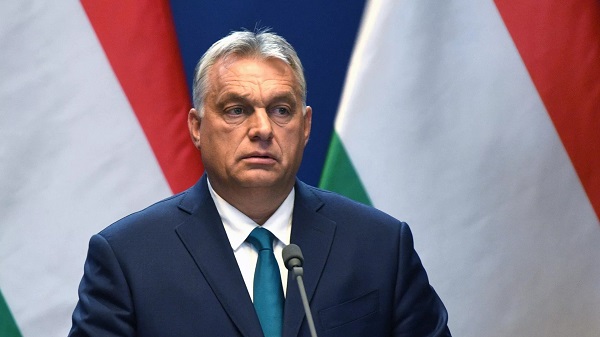
Hungarian Prime Minister Viktor Orbán has stirred controversy once again by calling on European Union leaders to bypass Washington and instead negotiate directly with Moscow on a long-term security agreement one that would explicitly prevent Ukraine from joining either NATO or the European Union.
Speaking at the opening of Hungary’s political season in the town of Kötcse, Orbán laid out his vision for what he believes is the only viable path to peace and stability on the continent. He argued that the West’s current approach to the war in Ukraine is unsustainable and warned that deeper integration of Ukraine into Western institutions would only prolong the conflict and inflict lasting damage on Europe.
“Europe doesn’t need to keep knocking on Washington’s door,” Orbán said. “What it needs is to go to Moscow and sign a security agreement not only about Ukraine but about long-term security between the EU and Russia. And such an agreement must clearly state that Ukraine will not become a member of NATO or the European Union.”
The Hungarian leader proposed that instead of full EU membership, Ukraine could enter into a strategic partnership with the European Union a compromise solution that Budapest would support. This, he said, would avoid direct confrontation with Russia while maintaining ties between Kyiv and Brussels.
According to Orbán, admitting Ukraine into the EU would amount to dragging the entire bloc into an intractable conflict with Russia, with dire economic consequences for Europe.
“The accession of Ukraine to the EU would mean Europe entering into conflict with Russia. It would be an economic suicide mission,” he warned. “A strategic partnership, on the other hand, could offer a more balanced and realistic path forward.”
Orbán also laid out his own stark prediction for Ukraine’s future, suggesting the country is already heading toward partition. In his view, the war will ultimately result in a divided Ukraine, with Russian-controlled territories in the east, a demilitarized buffer zone, and a western region whose final status remains uncertain.
“Europeans today speak delicately of ‘security guarantees,’” Orbán said, “but what they really mean is the division of Ukraine. There will be a Russian zone, a demilitarized zone, and a western zone. We don’t yet know the exact borders or status, but Ukraine is clearly moving toward a tripartite structure.”
He also argued that the West has implicitly recognized the existence of a Russian-controlled zone in eastern Ukraine. “The only question being debated now is whether this zone will consist of two, four, five, or six regions,” he claimed. “But no one is seriously discussing its disappearance.”
Orbán’s comments echo recent proposals from Keith Kellogg, a former national security adviser to U.S. Vice President Mike Pence and a key figure in Donald Trump’s foreign policy circle. In an interview with Western media, Kellogg suggested a post-war arrangement similar to the division of Berlin after World War II, with different zones of control but notably, without American ground troops on the ground in Ukraine.
These ideas come amid increasing debate in Western capitals about the long-term outcome of the war in Ukraine, which has entered its third year with no clear military victory in sight for either side. While the EU and NATO officially support Ukraine’s sovereignty and territorial integrity, voices like Orbán’s highlight a growing rift within the Western alliance over how to end the war.
In September 2022, Russia held widely disputed referendums in four Ukrainian regions Donetsk, Luhansk, Kherson, and Zaporizhzhia claiming overwhelming support for annexation. Despite international condemnation and the lack of recognition from most countries, these territories are now effectively under Russian control, reinforcing Orbán’s assertion of a de facto partition already in place.
As Europe heads into another winter with the war unresolved, Orbán’s remarks reflect a broader fatigue in some quarters and a willingness however controversial to consider unconventional solutions. Whether his proposals will gain traction in Brussels or among EU member states remains to be seen.
