

Ahmed Kamel – Egypt Daily News
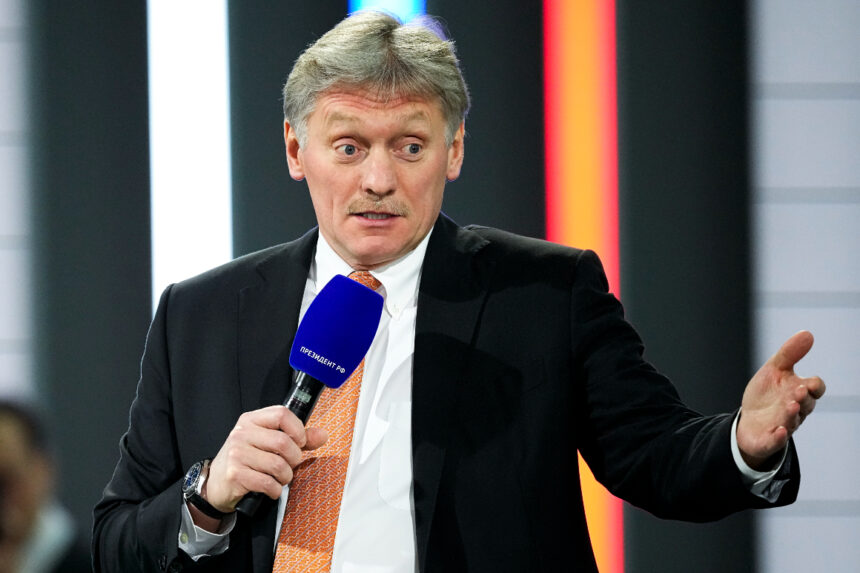
The Kremlin has expressed cautious optimism about an upcoming U.S.-Russia summit, suggesting it could serve as a critical step toward achieving a peaceful resolution to the war in Ukraine. Kremlin spokesperson Dmitry Peskov told reporters on Monday that Moscow views the anticipated meeting as a potential breakthrough in ongoing diplomatic efforts.
“The first and foremost expectation is progress toward a peaceful settlement of the Ukrainian conflict,” Peskov stated, according to Russia’s Sputnik news agency. He noted that preparations for the summit—expected to be held in Budapest, had not yet begun in full, and the final details remain undisclosed.
Despite the lack of formal progress, Peskov emphasized that Moscow remains engaged in ongoing communication with Washington and reiterated that Russia’s position on the Ukraine conflict is “well-known and unchanged.” He added, however, that mixed signals coming from the Ukrainian leadership continue to complicate peace efforts. “We see highly contradictory statements from Kyiv, and that of course does not contribute to any peace process,” he said.
Trump’s Mediation Efforts Raise Eyebrows
Adding a dramatic twist to the evolving diplomatic landscape, The Financial Times reported that U.S. President Donald Trump, has privately urged Ukrainian President Volodymyr Zelensky to accept a Russian proposal that would cede the entire Donbas region to Moscow in exchange for halting the war.

According to sources cited by the newspaper, Trump issued a stark warning to Zelensky during a recent meeting at the White House, stating that Russian President Vladimir Putin had “vowed to destroy Ukraine” if Kyiv rejected the terms. The meeting took place last Friday during Zelensky’s visit to Washington, which was primarily aimed at securing additional U.S. military support.
The report claims that Trump, who has publicly declared his intent to act as a peacemaker, pushed for a ceasefire based on current frontlines rather than providing new arms to Ukraine. Although initially resistant, Ukrainian officials reportedly persuaded Trump to revert to a more moderate position, supporting a freeze of the current lines of contact rather than full territorial concessions.
Following the meeting, Trump is said to have remarked that both sides should “stop the war at the existing front line,” a position that Zelensky later described as a “notable shift.”
Putin Softens Stance on Territorial Demands
The Financial Times also revealed that Putin, in a phone call with Trump just a day before his meeting with Zelensky, had offered a scaled-back version of Russia’s previous demands. While the Kremlin previously sought full annexation of Donbas, Kherson, and Zaporizhzhia territories representing about 20,000 square kilometers of Ukrainian land, Putin’s new proposal reportedly includes a willingness to relinquish parts of Kherson and Zaporizhzhia in exchange for full control over the larger Donbas region.
The report suggests this may be a calculated shift in Moscow’s approach, possibly signaling a readiness for compromise after nearly three years of intense warfare and mounting international pressure.
Toward a Second U.S.-Russia Summit
Amid these backchannel negotiations, both Trump and Putin have reportedly agreed to hold a second summit in Budapest within the next two weeks, following their earlier meeting in Alaska in August, which ended without tangible progress. The upcoming talks are expected to focus on the terms of a potential ceasefire and the broader framework for a post-war settlement.
While the prospect of a new U.S.-Russia-led initiative to end the war could mark a significant diplomatic moment, the idea of territorial concessions has already drawn criticism from Ukrainian officials and European allies, who fear it may legitimize Russian aggression and set a dangerous precedent.
For now, Moscow is signaling a willingness to negotiate, but remains firm on its strategic objectives. As Peskov remarked, “There is still a long road ahead, but serious work is underway.”
