

Ahmed Kamel – Egypt Daily News
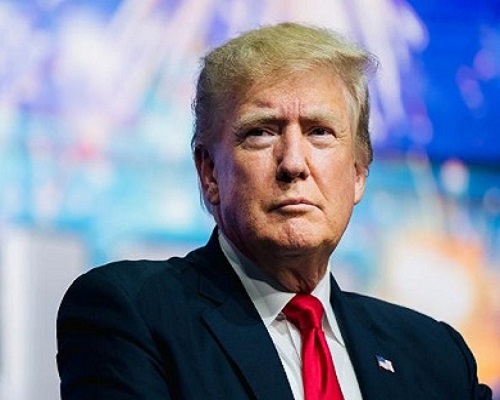
US President Donald Trump has said that his own moral judgment is the sole constraint on his exercise of global authority, arguing that international law does not govern his decisions and that his personal ethics serve as the ultimate check on his power.
In a wide-ranging interview, Trump was asked whether any limits exist on his global powers as president of the United States. He responded that only his own conscience and reasoning could restrain him. “There is one thing,” Trump said. “My own morality. My own mind. That’s the only thing that can stop me.” He added that he does not need international law when making decisions, insisting that he is not seeking to harm people.
While acknowledging that his administration is formally expected to comply with international law, Trump immediately questioned the concept itself. “It depends on what your definition of international law is,” he said, signaling a highly personalized interpretation of global legal norms.
The remarks offer a stark window into Trump’s worldview and come at a time when several recent US actions have drawn international attention and controversy. The interview was conducted days after US military forces carried out an operation in Venezuela that resulted in the arrest of President Nicolás Maduro and his wife. Both are facing federal charges in the United States, including narcoterrorism-related offenses, and have entered not guilty pleas. The operation has reignited debate over sovereignty and the limits of unilateral military intervention.
At the same time, the White House confirmed that Trump and his senior advisers have discussed a range of options to acquire Greenland, including the possible use of military force. White House press secretary Karoline Leavitt said the administration had examined multiple scenarios, reviving controversy over Trump’s long-standing interest in bringing the Arctic territory under US control.
Trump has also renewed his criticism of the North Atlantic Treaty Organization, questioning the alliance’s reliability and value to Washington. In a recent social media post, he said the United States would always stand by NATO “even if they won’t be there for us,” adding that he doubts alliance members would come to America’s aid if it truly needed support. The comments echo long-standing tensions between Trump and NATO allies over defense spending and mutual defense commitments.
Further underscoring his administration’s shift away from multilateral engagement, Trump signed a memorandum directing the United States to withdraw from 66 international organizations, including several affiliated with the United Nations. Trump argued that these bodies no longer serve US interests and impose unnecessary constraints on American sovereignty and decision-making.
Taken together, Trump’s statements and recent policy moves reflect a governing philosophy that prioritizes unilateral action, personal judgment, and national interest over established international institutions and norms. Critics warn that such an approach risks undermining global stability and weakening the rules-based international order, while supporters argue it restores decisive leadership and strategic flexibility to the United States.
As Trump continues to assert an expansive view of presidential authority, his comments are likely to intensify debate both domestically and internationally over the future of international law, alliances, and America’s role in shaping the global order.
