

Ahmed Kamel – Egypt Daily News
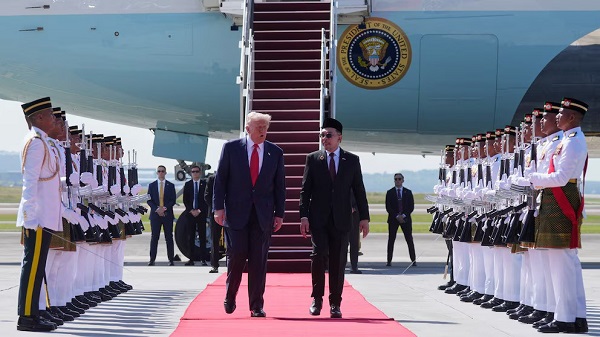
Former U.S. President Donald Trump arrived in Kuala Lumpur, Malaysia, on Sunday morning to begin a weeklong tour of Asia that is expected to include a series of pivotal meetings with regional leaders most notably with Chinese President Xi Jinping. The visit marks one of Trump’s most consequential foreign trips since returning to office, with trade, security, and diplomatic stabilization high on the agenda.
Trump landed shortly after 10 a.m. local time and immediately took to social media to announce his first engagements, which included meetings with the prime ministers of Thailand and Malaysia and the signing of a peace agreement between Thailand and Cambodia. The accord comes after a brief but intense border conflict between the two Southeast Asian nations earlier this year.
A Regional Peace Deal and Economic Partnerships
In a ceremony held in Kuala Lumpur, Trump joined the leaders of Cambodia, Thailand, and Malaysia in signing the Kuala Lumpur Peace Treaty, which formalizes a ceasefire and commits both Bangkok and Phnom Penh to military de-escalation and humanitarian measures along their shared border. The agreement includes the release of 18 Cambodian prisoners of war and the deployment of ASEAN observers to oversee compliance.
“I’m proud to help settle this conflict and build strong friendships across the region,” Trump said at the signing ceremony, emphasizing his personal involvement in the negotiations that led to the truce. “You’re saving people and saving countries by choosing prosperity and peace over needless bloodshed.”
Following the peace deal, Trump also finalized several trade agreements with Cambodia and Malaysia, and outlined a trade framework with Thailand. The White House said the new deals would set import tariffs on most goods from those nations at 19 percent, while also expanding cooperation in the critical minerals sector, a move aimed at strengthening supply chain resilience and reducing U.S. dependence on China.
Preparing for a Crucial Meeting with Xi Jinping
The centerpiece of Trump’s Asian tour will come later in the week, when he meets Chinese President Xi Jinping in South Korea. The two leaders are expected to discuss trade, rare earth exports, and broader geopolitical issues, including fentanyl trafficking and nuclear security.
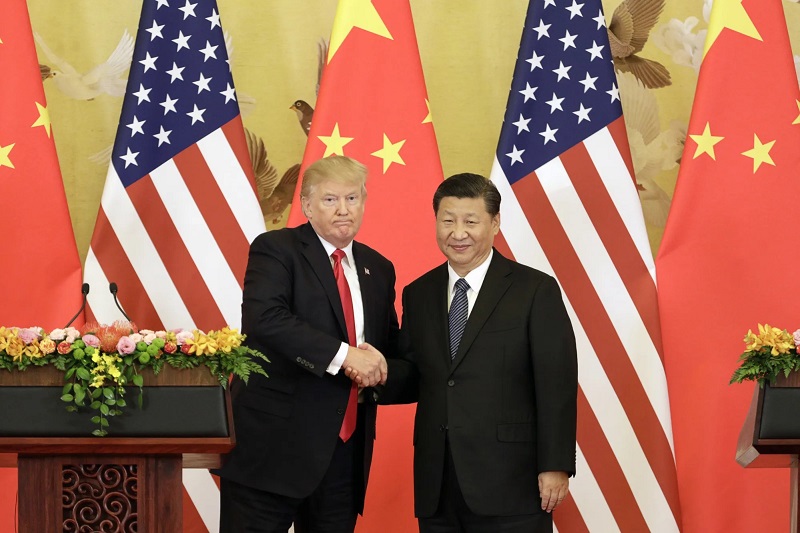
Relations between Washington and Beijing have fluctuated in recent months. After a brief thaw over the summer, tensions escalated again when China imposed tighter export controls on rare earth minerals restrictions the Trump administration has condemned as “economic coercion.” In response, Trump threatened to impose a 100 percent tariff on Chinese imports starting November 1 if the upcoming talks fail.
Despite the hardline rhetoric, both sides have signaled cautious optimism. U.S. Treasury Secretary Scott Bessent, who has been leading preparatory talks with Chinese Vice Premier He Lifeng, described recent discussions in Kuala Lumpur as “constructive, far-reaching, and giving us the ability to move forward.” He suggested that the existing trade truce between the two powers is likely to be extended, pending the outcome of the leaders’ meeting.
Stops in Japan and South Korea
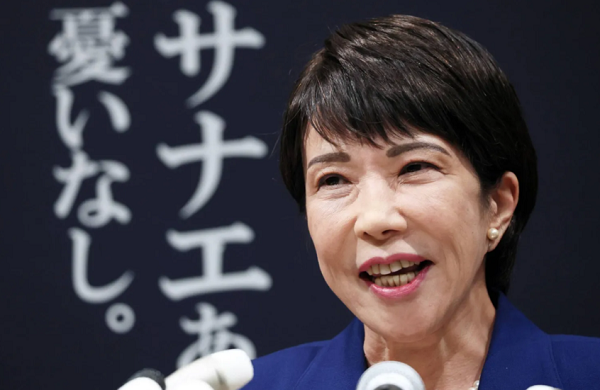
After Malaysia, Trump will travel to Tokyo for talks with Japan’s new prime minister, Sanae Takaichi the country’s first female leader. While the U.S. and Japan already share a robust trade pact, both sides are expected to reaffirm their economic partnership and discuss regional security issues.
Trump’s next stop will be South Korea, where he will participate in the Asia-Pacific Economic Cooperation (APEC) Summit. He is slated to hold bilateral talks with the South Korean president, deliver a keynote address at the APEC CEO luncheon, and attend a leaders’ working dinner.
The visit comes amid renewed tensions between Washington and Seoul following the detention and deportation of more than 400 South Korean workers at a Hyundai plant in Georgia under Trump’s strict immigration enforcement. The incident caused friction with South Korean business leaders and raised questions about future foreign investment in U.S. manufacturing concerns Trump is expected to address during his visit.
Trade Tensions Beyond Asia
Trump’s tour also comes on the heels of diplomatic strains with Canada. Days before departing Washington, he abruptly suspended trade negotiations with Ottawa after expressing anger over a decades-old political advertisement from Ontario that resurfaced featuring former U.S. President Ronald Reagan criticizing tariffs. Trump accused the ad of being an attempt to “illegally influence” an upcoming Supreme Court case regarding his tariff authority.
In addition, Trump recently imposed new sanctions on Russian oil firms, urging U.S. allies to curb imports of Russian crude. The White House has since reported that both China and India have begun scaling back purchases in response.
A Test of Trump’s Second-Term Diplomacy
Trump’s return to the global stage is being closely watched by allies and rivals alike. While he attended multiple APEC and ASEAN summits during his first term, this trip represents his first major diplomatic outreach in Asia since re-entering the White House a test of whether his trademark deal making style can stabilize trade tensions and rebuild U.S. influence in a region that has grown increasingly competitive.
With an ambitious itinerary, fraught geopolitical challenges, and high economic stakes, Trump’s week in Asia could set the tone for the next phase of U.S. foreign policy and determine whether his administration can balance its confrontational trade agenda with its stated goal of fostering peace and prosperity across the Pacific.
