

Ahmed Kamel – Egypt Daily News
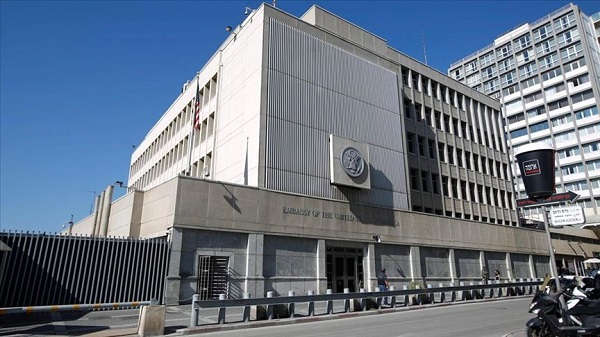
The US Embassy in Jerusalem has come under sharp criticism after announcing it is currently unable to evacuate American citizens from Israel, even as Washington urges Americans across the Middle East to leave the region amid escalating hostilities.
In a statement Tuesday, the US State Department said it is “taking historic action” to help Americans who wish to depart the Middle East. Officials said the department is facilitating charter flights from the United Arab Emirates, Saudi Arabia and Jordan, while working to expand capacity as security conditions permit.
The department added that commercial aviation options remain available in Saudi Arabia, the UAE, Oman and Egypt, and that officials are actively helping Americans book those tickets. For countries where commercial flights are unavailable, Washington said it is arranging travel to third countries and expanding ground transportation options for those seeking to leave Israel.
Despite those measures, the US Embassy in Jerusalem said in an earlier notice that it is “not in a position at this time to evacuate or directly assist Americans in departing Israel,” a message that quickly ignited political and online backlash.
The embassy noted that Israel’s Ministry of Tourism had begun operating shuttle services to the Taba border crossing with Egypt, but emphasized it could not recommend for or against using the route and warned that the US government cannot guarantee travelers’ safety. The advisory also urged US citizens to exercise heightened caution and remain aware of nearby shelters.
The controversy comes as tensions surge following joint US-Israeli strikes on Iran under a military campaign reported as Operation Epic Fury. The strikes followed the collapse of negotiations over Iran’s nuclear program, after Tehran refused Washington’s demand to halt uranium enrichment.
The widening confrontation has already produced heavy casualties. Iranian authorities say hundreds have been killed since the strikes began, while at least six US service members have reportedly died. Iran has launched retaliatory attacks against Israel and US-linked targets across the region, raising fears of a broader Middle East war.
Online reaction to the embassy’s position was swift and sharply divided along political lines.
Former congresswoman Marjorie Taylor Greene criticized the situation on social media, arguing that American taxpayers provide billions in annual aid to Israel while US citizens are being told they are largely on their own.
Progressive commentator Mehdi Hasan questioned the embassy’s priorities, while former Obama aide Tommy Vietor accused the administration of failing to protect Americans overseas after initiating what he called a reckless conflict.
California Governor Gavin Newsom’s office also weighed in, describing the situation as evidence of failed planning and leadership.
The US Embassy in Israel is located in Jerusalem, after former President Donald Trump moved it there from Tel Aviv in 2018, a decision that reshaped US diplomatic positioning in the region.
Trump has defended the strikes on Iran, saying the objective was to eliminate imminent threats tied to Tehran’s nuclear and missile programs. In remarks announcing the operation, he said the United States would not allow Iran to obtain a nuclear weapon and warned Iranian leaders their actions endangered US forces and allies.
Pressed Tuesday about the absence of a formal evacuation plan, Trump said events unfolded too quickly.
“Well, because it happened all very quickly,” he said, adding that he believed Iran had been preparing attacks against Israel and others in the region.
Meanwhile, the State Department says it has fielded nearly 3,000 calls from Americans in the Middle East seeking assistance and has waived statutory requirements that would normally require citizens to reimburse the government for evacuation-related travel.
Criticism has continued from Democratic lawmakers and foreign policy analysts. Senator Chris Murphy argued the administration is simultaneously urging Americans to leave while failing to provide sufficient means to do so. Journalist Sam Stein noted the scale of the challenge, pointing to hundreds of thousands of Americans potentially affected by the advisory.
Neera Tanden of the Center for American Progress questioned whether adequate contingency planning had been done before the military operation began.
For now, Washington continues to urge Americans across the Middle East to depart using available commercial options as the conflict shows signs of further escalation. Trump has suggested the confrontation could last four to five weeks and has openly called for political change in Iran once military operations conclude, a stance likely to intensify debate in Washington and abroad over the scope and risks of the unfolding crisis.
