

Ahmed Kamel – Egypt Daily News
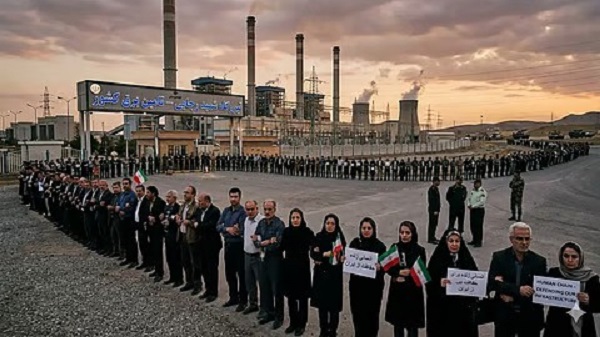
Iran has severed direct communications with the United States as women and children formed human shields around key energy sites, following President Donald Trump’s warning that “a whole civilization will die tonight.”
Negotiations continue through intermediaries, including Pakistan, but the cutoff has complicated efforts to meet Trump’s 8 p.m. ET deadline, according to the Wall Street Journal. An Iranian official stated that the severed communication was intended as a signal of defiance and disapproval. State media broadcast images of civilians protesting near bridges and power plants, waving flags as loudspeakers blared chants, directly challenging Trump’s threats.
Trump declared on Truth Social: “A whole civilization will die tonight, never to be brought back again. I don’t want that to happen, but it probably will.” Despite warnings from international law experts that targeting civilian energy and water infrastructure would constitute a war crime, Trump threatened to strike Iran’s infrastructure.
Trump’s envoy Steve Witkoff and Vice President JD Vance have been leading negotiations, with Pakistan mediating, but Iran officially led by Supreme Leader Ayatollah Mojtaba Khamenei, who is reportedly incapacitated has rejected direct talks. A U.S. intelligence memo suggests Khamenei is unconscious and unable to make decisions, raising urgent questions about Tehran’s command structure.
Overnight, the United States struck approximately 50 military targets on Kharg Island, Iran’s crucial oil export hub. Bunkers, radar stations, and ammunition depots were hit, according to senior administration officials, with footage circulating on social media showing extensive damage.
Iranian officials rejected a temporary ceasefire proposed through intermediaries, and the regime has not agreed to Trump’s demand to reopen the Strait of Hormuz, a vital chokepoint through which roughly 20 to 25 percent of the world’s seaborne oil passes. Trump had warned that Iran had until the end of Tuesday to restore access or face strikes on civilian infrastructure, including bridges and power plants the largest escalation in the conflict to date.
During a White House press briefing, Trump emphasized that “very little is off limits,” adding, “every power plant will be destroyed, every bridge.” The threat has caused global oil markets to spike, with U.S. gas prices rising to an average of $4.14 per gallon, a jump of more than a dollar since the conflict began.
Iran has threatened retaliation, warning that attacks on its energy facilities could prompt strikes on water supplies for U.S. allies in the Gulf, where cities rely heavily on desalination. The Iranian U.N. envoy condemned the U.S. deadline as a “direct incitement to terrorism” and evidence of potential war crimes, while the regime’s military command dismissed Trump as “delusional.”
Vice President Vance, speaking with Hungarian Prime Minister Viktor Orban, stated that “very shortly, this war will conclude,” adding that the U.S. has “largely accomplished its military objectives” and that further negotiations are expected before Trump’s deadline.
A recent intelligence assessment, shared with Gulf allies, notes that Supreme Leader Khamenei is receiving medical treatment in Qom and is not capable of running the government. The memo warns that this has created uncertainty over who is actually directing Iran’s military and political strategy.
As the deadline approaches, Iran’s defiance and the presence of human shields highlight the heightened stakes, with global energy markets on edge and the region on the brink of further escalation.
