

Ahmed Kamel – Egypt Daily News
NATO allies are facing mounting pressure from President Donald Trump to take a more active role in the U.S.-led operations against Iran, with the president reportedly demanding that warships and other military assets be deployed to the Strait of Hormuz.
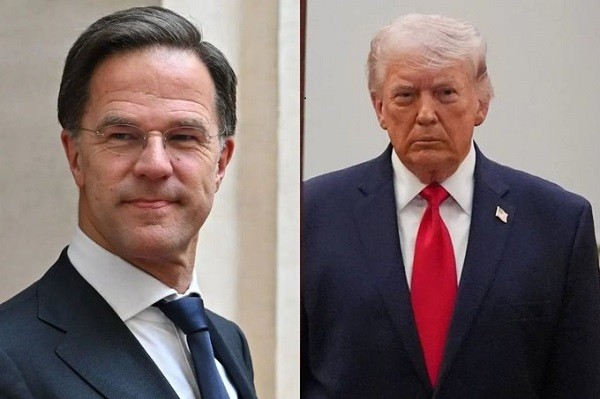
NATO Secretary General Mark Rutte, speaking in Washington, acknowledged that some member states were initially slow to support the U.S. strikes. He attributed the hesitation to the surprise nature of the attacks, which Trump had kept confidential to maintain strategic advantage. “Some allies were caught off guard, but now they are stepping up and providing significant support,” Rutte said, highlighting Europe’s commitment to prevent Iran from acquiring nuclear weapons.
The president has publicly criticized NATO for what he perceives as a lack of urgency, writing on Truth Social that the alliance “understands nothing unless pressure is applied.” Trump’s demands, according to reports, leave NATO facing a choice: provide concrete military commitments or risk a permanent erosion of U.S. support.
Rutte sought to clarify earlier remarks that caused confusion when he jokingly called Trump “daddy,” explaining it was a mistranslation from Dutch. The NATO chief emphasized that despite the linguistic mishap, he maintains a candid and cooperative relationship with the U.S. president.
European allies, Rutte noted, are now mobilizing to meet Trump’s expectations, reinforcing NATO’s collective defense capabilities while pursuing a stronger, more self-reliant military posture. “We are building a NATO that is capable, ready, and fully engaged,” he said.
Meanwhile, tensions in the Middle East remain high. Iran warned that it will respond to continued military actions in Lebanon, rejecting ceasefire talks as ineffective if Israeli strikes persist.
Germany’s Chancellor Friedrich Merz described the ongoing conflict as a “stress test” for NATO, stressing the importance of maintaining the alliance and its trans-Atlantic ties. He affirmed his commitment to collaborating with the U.S. to strengthen NATO, calling it “irreplaceable” for Europe’s security.
The situation marks a critical juncture for the alliance, with both European nations and the U.S. recalibrating their roles amid a volatile regional conflict and growing demands for rapid, tangible action.
