

Ahmed Kamel – Egypt Daily News
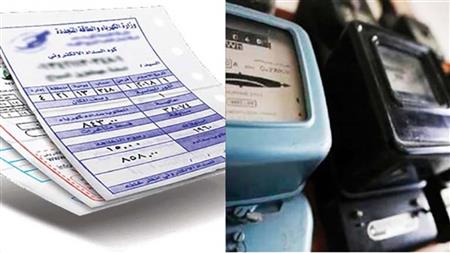
Regional electricity distribution companies across Egypt have officially begun enforcing newly updated residential consumption rates retroactively to cover the entirety of July’s energy usage. The sudden fiscal implementation has resulted in the automatic deduction of outstanding pricing differences directly from active consumer balances or during the initial card recharge following the system’s digital activation.
Thousands of prepaid utility meter users expressed surprise in early August when varying monetary deductions occurred upon reloading their cards, triggering widespread public concern on social media networks regarding potential technical network glitches or unauthorized administrative actions.
A senior official from the Ministry of Electricity and Renewable Energy clarified that applying the revised electricity tariff to July’s consumption complies with standard financial regulations, as the state’s new fiscal year officially commences on July 1 annually. The ministry representative explained that digitized prepaid meters operate on a synchronized software matrix; consequently, when an executive pricing adjustment is formalized, the resulting historical difference is automatically registered as a debt against the account.
If a consumer maintains a sufficient pre-existing balance, the system processes the retroactive July debt immediately, whereas low-balance accounts experience an automatic debit during their next physical card recharge.
State Amplifies Judicial Inspection Powers to Counter Widespread Commercial Electricity Theft
Administrative officials stated that the increased electricity tariffs are vital to preserve grid stability and maintain baseline service quality across provincial governorates during the high-demand summer season. To complement the pricing updates, the Ministry of Electricity is expanding its legal enforcement frameworks by granting extended judicial police powers to specialized utility employees and establishing rigid daily report targets for regional field inspectors.
This aggressive regulatory clampdown is designed to systematically eliminate commercial electricity theft and minimize illegal distribution taps that drain national energy supplies.
However, the state’s pricing strategy faces constructive critique from prominent industry specialists who advocate for a more holistic approach to sector sustainability. Dr. Amgad Al-Wakeel, an energy expert and former head of the Nuclear Power Plants Authority, noted that managing the electrical sector’s challenges should not rely exclusively on continuous tariff hikes.
Al-Wakeel emphasized that implementing comprehensive network upgrades, expanding smart meter grids, and improving transmission efficiency can effectively generate new usable energy capacities at a lower overall cost without requiring additional fossil fuel consumption or expensive generation plant construction.
Academics Call for Cost Accounting Transparency to Anchor Public Trust and Diversify Energy Mix
Al-Wakeel highlighted that accelerated investments into national renewable energy infrastructure and the rapid execution of Egypt’s peaceful nuclear power program are essential to permanently diversify the sovereign energy mix. Transitioning toward atomic and green generation assets will gradually reduce Egypt’s baseline reliance on expensive fossil fuels, insulating domestic manufacturing from international commodity price fluctuations while stabilizing long-term production costs.
The energy expert concurrently questioned official ministry declarations stating that the actual generation cost of a single kilowatt-hour has exceeded eight Egyptian pounds under modern market conditions.
Citing official schedules published by the Electricity Utility and Consumer Protection Regulatory Agency, Al-Wakeel pointed out that high-volume residential consumers utilizing over 1,000 kilowatt-hours per month are already legally mandated to cover 100 percent of their actual engineering costs with zero state subsidies. He urged the Ministry of Electricity to release a clear, mathematically unified technical statement detailing the exact criteria used to calculate localized production costs rather than debating abstract figures in public media.
Providing transparent, verified financial references remains crucial to foster civic trust on a vital infrastructure issue that directly impacts every household and business operating within the country.
