
Ahmed Kamel – Egypt Daily News
World
Israelis voted Tuesday in the country’s first nationwide election since the Hamas-led attacks of October 7, 2023, with turnout reaching levels not recorded in decades. By 2 p.m. local time, 44.9% of eligible voters had cast ballots, the highest turnout recorded by that point in the day since 1973. A later update put participation at 55.7%, also described as the highest in 50 years. Voting was still in progress, and no official result had been announced.
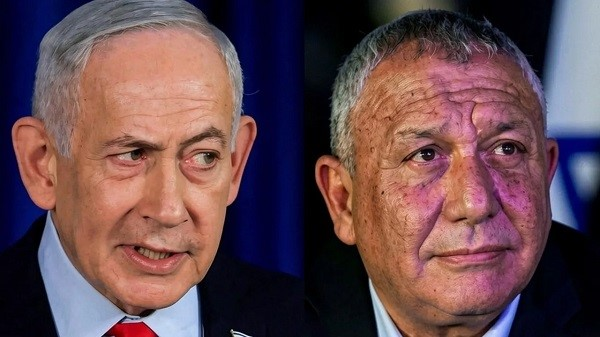
The election pits Prime Minister Benjamin Netanyahu’s right-wing bloc against an opposition led by Gadi Eisenkot, a former chief of staff of the Israel Defense Forces. Netanyahu is seeking to remain in office after years marked by war, political crisis and intense debate over the government’s handling of security. Eisenkot has presented himself as an alternative, arguing that Israel needs a change in leadership and an independent investigation into the failures surrounding the October 7 attacks.
Israelis vote for parties rather than directly electing a prime minister. The election determines the makeup of the 120-seat Knesset, and a prospective government must assemble a coalition capable of winning at least 61 seats. With no single party expected to approach that number, the result will depend not only on which parties gain seats, but also on which combinations can reach a governing majority.
Turnout provides a factual measure of voter participation, but it does not show which political bloc is ahead. Election authorities reported increased activity at polling stations around the country. Some locations experienced heavy lines, and parties asked for voting hours to be extended. More than 20,000 police officers and volunteers were deployed to oversee the election.
Security has been central to the campaign. Netanyahu emphasized his relationship with U.S. President Donald Trump and argued that Israel faces serious threats. Eisenkot accused the prime minister of using fear to influence voters and urged Israelis to participate. Both leaders have described the election as consequential, but the eventual Knesset balance and coalition negotiations will determine who can govern.
Arab parties may also affect the post-election arithmetic. Netanyahu and Eisenkot have ruled out a formal partnership with Arab-led parties, but those parties could still influence whether a government is formed. Depending on the seat count and their decisions, they could potentially support a minority government from outside a coalition or abstain in a confidence vote. Their role will become clearer only after the official results are known.
The election’s high turnout reflects strong engagement in a campaign shaped by the war and its consequences. It does not, by itself, indicate support for one leader or bloc. Voters may have turned out for different reasons, including security concerns, dissatisfaction with the government, support for Netanyahu, or a desire to influence the country’s direction after years of conflict.
The count will not necessarily settle the question of who becomes prime minister immediately. Exit polls, if released after voting ends, are estimates rather than official results. Once the votes are counted and party representation is established, President Isaac Herzog is expected to consult party leaders and ask the candidate most likely to form a government to try to assemble a coalition. That process can take several weeks. If no candidate succeeds, another election could follow, while the existing government remains in a caretaker role.
For now, the clearest verified development is the turnout: participation has reached an unusually high level by historical standards. The final count will show how that participation translates into seats. Coalition talks will then determine whether Israel gets a government with a workable majority or faces another period of political deadlock.
