

Egypt Daily News – Egypt News.
Egypt has formalized a $1 billion financing agreement with the World Bank aimed at supporting economic reforms, strengthening the country’s ability to withstand external shocks and advancing its transition to a greener economy.
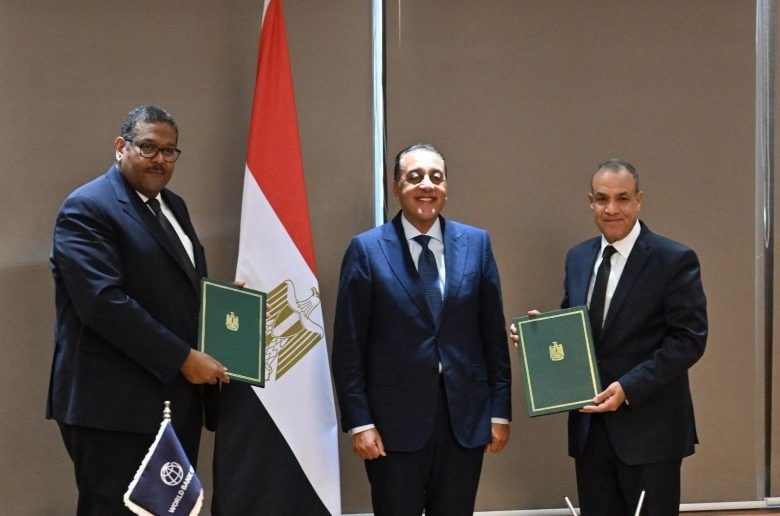
Prime Minister Mostafa Madbouly attended the signing ceremony at the Ministry of Foreign Affairs headquarters in the New Administrative Capital. Foreign Minister Badr Abdelatty, who is also Egypt’s governor at the World Bank, signed the agreement with World Bank Regional Director Alwaleed Alatbani. Planning and Economic Development Minister Ahmed Rostom and Deputy Finance Minister Yasser Sobhi also attended.
The financing forms part of the second phase of the Development Policy Financing programme, known as “Generating Resilience, Opportunities, and Welfare for a Thriving Egypt.” The World Bank’s board approved the $1 billion package in May 2026, within the framework of its 2023–2027 strategic partnership with Egypt. The signing formalizes the agreement under the programme.
The government says the initiative is intended to improve the competitiveness of the Egyptian economy and make the business environment more supportive of investment and job creation. Its reform agenda includes changes to the governance of state-owned companies, efforts to remove obstacles to private investment and growth, and measures to promote fair competition. It also seeks to improve domestic revenue collection and reduce the cost of government financing.
These policy areas are connected to a broader objective: increasing the economy’s capacity to manage external pressures. Egypt has faced economic challenges linked to global conditions and regional instability. The programme is designed to support reforms that the government says can strengthen resilience while encouraging private-sector activity and sustainable growth.
The second phase also includes social protection measures. The plan calls for expanding the number of people benefiting from the Takaful and Karama programmes, which provide support to eligible households. The financing programme pairs those efforts with economic and environmental reforms, presenting social protection as one part of a wider agenda rather than a separate initiative.
Environmental measures focus on improving the monitoring of greenhouse-gas emissions and developing carbon-credit markets. The programme also aims to strengthen the financial sustainability of the electricity and water sectors. These steps are intended to support Egypt’s green transition and improve its ability to respond to the effects of climate change.
The government has linked the financing to several national policies, including the State Ownership Policy, the government’s programme for offering state assets, Egypt Vision 2030 and the National Climate Change Strategy 2050. Officials say progress on these priorities is part of a broader effort to attract investment, support development and make the economy better able to withstand global disruptions.
The World Bank’s approval of the package came as part of its development policy financing partnership with Egypt. The programme is the second operation in a planned series of three concessional financing operations. Its themes include private-sector-led job creation, macroeconomic and fiscal resilience, social protection and a shift toward greener economic activity.
The signing ceremony also included a presentation of historical documents from the Ministry of Foreign Affairs’ archives. Among them were Egypt’s signed copy of the World Bank’s founding agreement, the first bilateral agreement between Egypt and the bank, dated 1959, and a document related to the reopening of the Suez Canal. The display highlighted the longstanding relationship between Egypt and the institution alongside the current financing arrangement.
The agreement brings together immediate economic priorities and longer-term structural goals. For the government, the central challenge is to translate its reform commitments into stronger investment, job creation and public services while managing financial pressures. The programme’s measures—from competition and state-company governance to social assistance and emissions monitoring—are intended to contribute to that effort.
The $1 billion package is therefore not limited to a single sector or project. It supports a reform programme spanning public finances, business conditions, household assistance and climate policy. Its impact will depend on how the agreed measures are implemented and whether they help deliver the stated objectives of stronger economic resilience, a more attractive investment environment and more sustainable growth.
