

Ahmed Kamel – Egypt Daily News
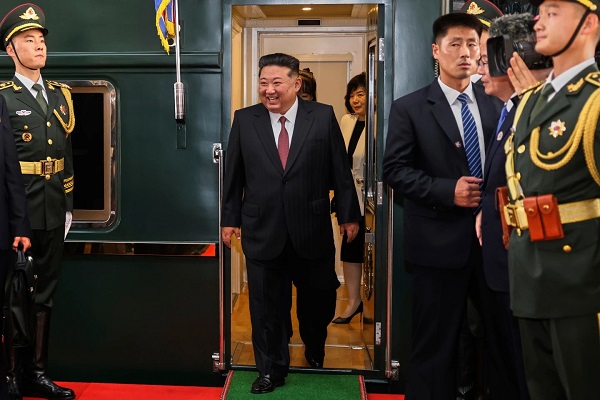
North Korean leader Kim Jong Un arrived in Beijing by train on Tuesday ahead of a major military parade that will see him share the stage with Chinese President Xi Jinping and Russian President Vladimir Putin a rare and highly symbolic convergence of three leaders who have increasingly positioned themselves in opposition to U.S. global influence.
The parade, set to take place Wednesday in Tiananmen Square, commemorates the 80th anniversary of the end of World War II and China’s resistance against Japanese occupation. It marks Kim’s first appearance at a major multilateral event since taking power in 2011 and the first time all three leaders Kim, Xi, and Putin—will appear together publicly.
While no official trilateral summit has been confirmed, diplomatic observers say the event could serve as a powerful visual message of growing coordination among the three authoritarian leaders. None of the three countries have ruled out high-level bilateral meetings on the sidelines.
Kim’s Delegation and Public Appearances
According to North Korea’s state-run Korean Central News Agency (KCNA), Kim was warmly received at Beijing Railway Station by senior Chinese officials. Photos released by KCNA show Kim accompanied by his young daughter reportedly named Kim Ju Ae whom South Korean intelligence officials increasingly view as his likely successor. This is her first known foreign trip, after accompanying her father on numerous domestic events, including missile launches, since 2022.
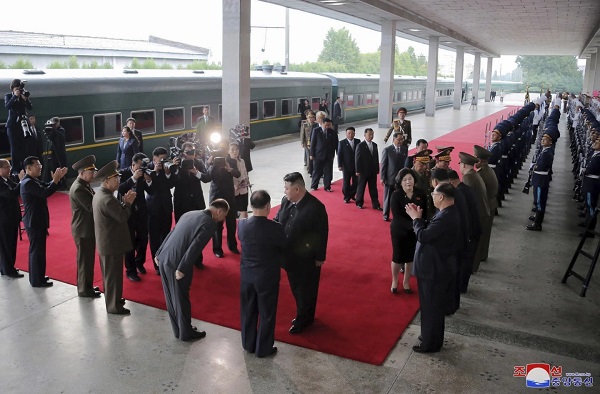
The North Korean delegation also includes high-ranking officials such as Foreign Minister Choe Son Hui. South Korea’s National Intelligence Service (NIS), which briefed lawmakers in Seoul earlier on Tuesday, said Kim is expected to receive security protocols equivalent to those afforded to President Putin and may stand alongside Putin and Xi during the parade.
A Strategic Diplomatic Move
Kim’s attendance at the parade, his first trip to China since 2019, is seen as a strategic bid to break out of diplomatic isolation and recalibrate North Korea’s international standing. It also reflects Pyongyang’s shifting foreign policy posture, which has prioritized its military and economic ties with Moscow since 2022.
According to the NIS, North Korea has sent as many as 15,000 troops to assist Russia in its war against Ukraine. Around 2,000 of them are believed to have been killed in combat. Additionally, North Korea has agreed to send thousands of military construction workers and deminers to Russia’s Kursk region, with at least 1,000 already reportedly deployed.
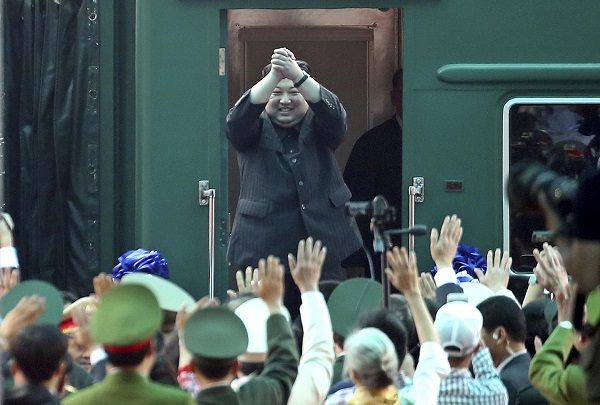
Despite increasingly close ties with Russia, analysts say Kim is now looking to repair frayed relations with China North Korea’s largest trading partner and historical ally. Ties had cooled in recent years due to North Korea’s pandemic-era border closures and Beijing’s frustration with Pyongyang’s unpredictable behavior. Kim’s re-engagement with China suggests a recognition that Pyongyang must hedge its bets as the war in Ukraine enters a new phase.
Unity in Defiance
Wednesday’s parade comes at a moment of heightened geopolitical tension, with all three leaders Kim, Xi, and Putin facing mounting friction with the West. Their joint appearance in Beijing is likely to be viewed by Washington and its allies as a demonstration of solidarity among nations challenging the existing U.S.-led global order.
In recent months, North Korea has increasingly aligned itself with China and Russia not only through military and economic cooperation but also through diplomatic signaling. Pyongyang has issued statements on conflicts in the Middle East and the Taiwan Strait, portraying itself as part of a wider coalition confronting U.S. power.
Nuclear Ambitions Unabated
Just before departing for China, Kim paid a high-profile visit to a missile research institute in North Korea to inspect the development of a new engine for what KCNA called a “next-generation” intercontinental ballistic missile (ICBM). Analysts believe this refers to a multi-warhead system designed to evade U.S. missile defenses, an escalation that signals Pyongyang’s continued focus on expanding its nuclear arsenal despite international sanctions and condemnation.
Prospects for Diplomacy
Despite the intensifying alignment among China, Russia, and North Korea, there are signs of renewed interest in diplomacy. Both U.S. President Donald Trump and newly elected South Korean President Lee Jae-myung have expressed interest in resuming talks with Pyongyang. However, North Korea has so far rebuffed these overtures, demanding the lifting of sanctions and an end to joint U.S.-South Korea military drills as preconditions for dialogue.
Kim’s participation in Beijing’s high-profile parade may serve multiple purposes: strengthening ties with two of his most powerful allies, signaling resolve to his domestic audience, and subtly reminding Washington and Seoul that North Korea is not isolated it’s choosing its own alliances.
