

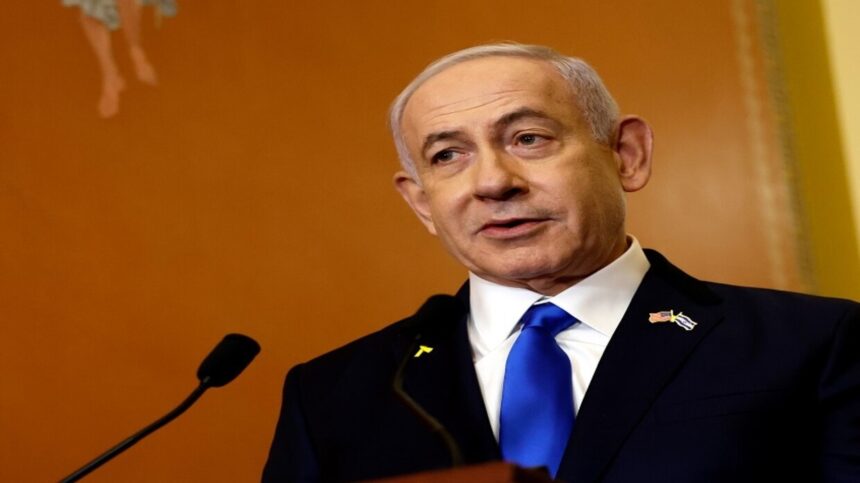
Egypt Daily News – Israeli Prime Minister Benjamin Netanyahu announced on Sunday that Israel had accepted a U.S.-backed proposal for a ceasefire and hostage exchange deal in Gaza, but claimed that Hamas rejected the offer, complicating efforts to bring an end to the nine-month conflict.
Speaking to reporters, Netanyahu said that the militant group is refusing to agree to terms that would end hostilities, insisting instead on maintaining its military presence in the Gaza Strip and rearming itself.
“Hamas refuses the deal and insists on remaining in Gaza and rearming itself,” Netanyahu said. “That is absolutely unacceptable to us. We are committed to freeing the hostages, but also to eliminating Hamas as a threat.”
The deal, mediated by the United States through envoy Steve Witkoff, along with input from Qatari and Egyptian negotiators, had reportedly addressed three out of four key points of contention. However, negotiations remain deadlocked over one central issue: the scope of Israel’s military withdrawal from Gaza during the proposed truce period.
Sources said that Hamas has made clear it will not accept any Israeli military presence along the so-called “Morag corridor,” a strategic strip near Rafah that Hamas says would prevent nearly 400,000 displaced Palestinians from returning to their homes. The group is reportedly willing to revisit a January proposal from Qatar that would see Israeli forces pull back to a line 700 meters from the Gaza border, with limited flexibility in certain zones. However, Hamas insists the corridor must be completely vacated.
Meanwhile, Palestinian officials accuse Israel of using the negotiation process to prolong the war. Dr. Mohammed Abu Al-Rub, spokesperson for the Palestinian Government Media Center, criticized Tel Aviv’s shifting proposals and alleged that they aim to delay a resolution rather than secure one.
The current draft deal includes a 60-day ceasefire during which Hamas would release 10 living hostages captured during its October 7, 2023 attack on southern Israel. In return, Israeli forces would gradually withdraw from parts of Gaza. International agencies, rather than Israeli or Hamas-affiliated groups, would be tasked with delivering humanitarian aid in those areas. Notably, this would sideline the Gaza Relief Foundation, a U.S.- and Israeli-backed organization that has played a controversial role in aid distribution.
The coming days are seen as critical for the fate of the negotiations. Mediators are awaiting updated Israeli troop deployment maps to assess the feasibility of a phased withdrawal and de-escalation. Diplomatic sources caution that the window for a deal is narrowing fast and unless a compromise is reached soon, talks could collapse entirely.
As both sides hold firm to their positions, hopes for a ceasefire that would bring relief to the war-torn enclave and potentially pave the way for broader regional stabilization remain in the balance.
