

Ahmed Kamel – Egypt Daily News
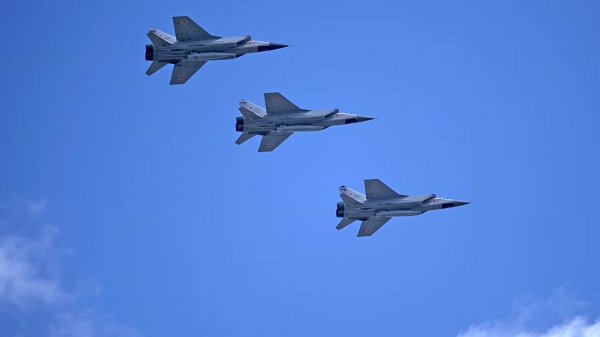
Russia has issued a chilling warning to NATO, stating that the downing of any Russian aircraft by alliance members would be interpreted as an act of war. The statement, made by Moscow’s ambassador to France, comes amid a sharp rise in drone incursions and airspace violations that have rattled European security officials and heightened fears of open conflict between Russia and the West.
Alexey Meshkov, Russia’s envoy in Paris, warned in a televised interview that any attempt to shoot down Russian planes could trigger a full-scale confrontation. “There are many NATO planes that violate Russian airspace deliberately or not, it happens quite often. They are not shot down afterward,” he told RTL, pushing back against mounting calls from Western leaders for a tougher stance on Russian aerial provocations.
His remarks follow a series of alarming incidents that have brought the NATO-Russia standoff dangerously close to the brink. In recent weeks:
- Three Russian fighter jets violated Estonian airspace, prompting condemnation from Baltic leaders.
- Poland shot down multiple Russian drones that crossed into its airspace during strikes targeting Ukraine, marking the first direct engagement of Russian aerial assets over NATO territory since the 2022 invasion.
- Romania reported a similar drone incursion, while a swarm of drones temporarily shut down Copenhagen Airport in Denmark, a move that European officials suspect was orchestrated by Moscow.
Poland, which shares a border with both Ukraine and Belarus, has been among the most vocal NATO members responding to these threats. The Polish government is now fast-tracking legislation that would authorize its military to shoot down any unauthorized Russian drones or aircraft over Ukraine or its own airspace without prior NATO or EU approval. Prime Minister Donald Tusk characterized the current situation as the “closest we’ve been to open conflict since World War Two.”
“We will shoot down flying objects that violate our territory and fly over Poland, there is absolutely no discussion about that,” Tusk said in a press conference earlier this week. “But we must act with great caution in less clear-cut situations.”
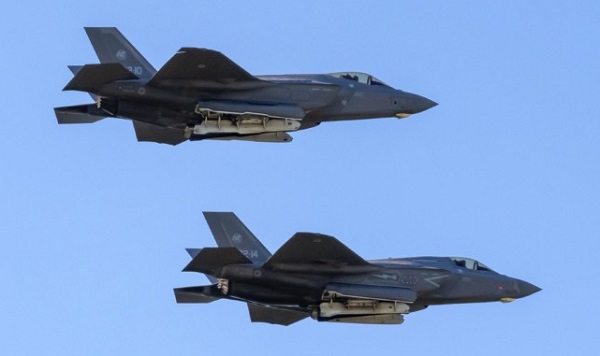
He cited a recent incident in which Russian fighter jets flew close to the Petrobaltic oil platform in the Baltic Sea. While the jets did not technically breach Polish airspace, Tusk acknowledged that decisions in such grey areas must be weighed carefully to avoid triggering a wider conflict. “You really need to think twice before taking actions that could start a very acute phase of conflict,” he warned.
Tusk also emphasized the importance of NATO unity, saying he needs “absolute certainty” that Poland would not stand alone in the event of a military escalation. His remarks echo growing concerns among NATO members that Russia is deliberately testing the alliance’s resolve, probing for weaknesses, and exploiting legal and political ambiguity in how Western nations respond to border violations.
Meanwhile, tensions have also flared on the maritime front. The Royal Navy recently scrambled HMS Iron Duke to shadow the heavily-armed Russian frigate RFN Neustrashimy, along with the military cargo ship Sparta IV, as the vessels transited through the North Sea and English Channel. A Wildcat helicopter was also deployed during the operation, marking another in a series of high-stakes encounters between NATO and Russian naval forces.
“Russian warships are increasingly transiting through the English Channel,” warned UK Defence Minister Luke Pollard. “The Royal Navy protects the UK 24/7, monitoring Russian movements to ensure the security of our waters and undersea cables. This is a clear demonstration of how the UK stands firm with our NATO allies to deter Russian aggression.”
Russia continues to deny any involvement in the drone incursions, with Meshkov claiming Moscow does not engage in such tactics. “Russia doesn’t play with anyone. It’s not really our thing,” he said, accusing the West of deceiving Moscow “on many occasions.”
However, many European leaders view the pattern of violations as deliberate provocations designed to destabilize the region and challenge the credibility of NATO’s collective defense obligations.
As tensions continue to mount, the risk of miscalculation looms larger. With both sides stepping up aerial and maritime patrols, the chances of a direct clash accidental or otherwise are increasing. NATO’s strategic posture is being tested as never before since the Cold War, and leaders across the alliance are now weighing how far to go in pushing back against what they see as a deliberate campaign of escalation from Moscow.
The fragile balance that has thus far kept NATO and Russia from direct confrontation is showing signs of strain. Whether that balance can be maintained in the face of continued provocation remains to be seen.
