

Ahmed Kamel – Egypt Daily News
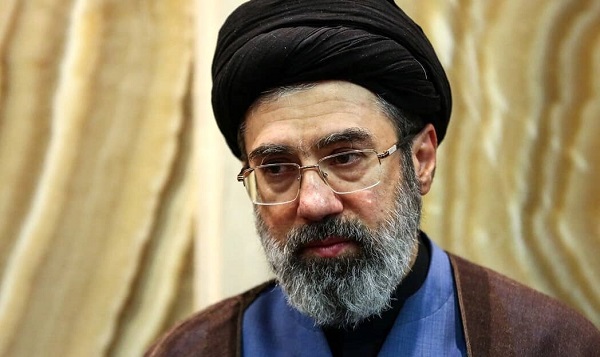
In a major restructuring of the country’s military and security landscape, Iran’s Supreme Leader Mojtaba Khamenei has initiated a sweeping reorganization of top institutional leadership. This strategic transformation, analyzed in depth by Foreign Policy magazine, signals a profound shift in how Tehran intends to manage its ongoing multi-front conflicts with the United States and Israel.
The cornerstone of this institutional realignment is the high-profile appointment of Mohsen Rezaee as the Secretary of the Supreme National Security Council. Rezaee, a veteran strategist who commanded the Islamic Revolutionary Guard Corps for sixteen years, historically oversaw the foundational development of Iran’s modern ground, air, and naval divisions, alongside the elite Quds Force and the Khatam al-Anbiya Central Headquarters.
Centralized Command Matrices Formulated to Address Historic Command Structure Attrition
This aggressive domestic defense overhaul serves as a direct structural response to severe military leadership losses sustained by Tehran since June 2025. The revised doctrine explicitly moves away from decentralized proxy operations, prioritizing a highly centralized military command that emphasizes rapid offensive readiness and synchronized coordination between economic, diplomatic, and internal security initiatives.
A strategic return to prominence for hardline figures like Rezaee indicates that Iran is aiming to blend active diplomacy with significantly enhanced military deterrence. Foreign Policy analysts note that Rezaee famously holds a historical preference for maximizing domestic military power prior to engaging in international treaty making, a doctrine he strictly championed during the final months of the Iran-Iraq War in 1988.
Revolutionary Guard Leadership Realigned to Enforce Strict Naval Blockades Across Global Energy Chokepoints
To solidify this centralized warfare command, Khamenei appointed Ali Abdullahi as the Chief of the General Staff of the Armed Forces while fully integrating the Khatam al-Anbiya Headquarters into active combat operations. Concurrently, Ahmad Vahidi has been elevated to lead the Revolutionary Guard with an explicit mandate to achieve maximum deterrence and execute powerful offensive campaigns.
The critical naval command of the Revolutionary Guard has been handed to Ali Azmi, placing him directly at the center of evolving strategies surrounding the blockaded Strait of Hormuz. Tehran continues to utilize absolute control over this global energy bottleneck as its primary economic choke point against Washington, locking down twenty percent of global oil transits amid highly volatile maritime navigation negotiations.
Internal Intelligence Grids Tightened as Tehran Rejects Historical Policies of Strategic Restraint
On the domestic front, the Supreme Leader reinstalled the former head of Revolutionary Guard intelligence, Hossein Taeb, to command the internal Basij paramilitary forces. Taeb is tasked with utilizing advanced surveillance technology to expand localized domestic intelligence networks and permanently secure the capital against internal unrest or foreign intelligence infiltration.
This comprehensive doctrine stems from an intensive internal policy review conducted after the United States unilaterally withdrew from the nuclear agreement in 2018. Influential military circles in Tehran now view their past policy of strategic restraint as a severe mistake that sent a false signal of systemic weakness to adversaries like Washington and Tel Aviv.
Competing Executive Doctrines Clash Over Final Conditions to Open Hormuz Transit Routes
Consequently, Iran’s new military elite is determined to convert its wartime gains into long-term regional influence that remains completely independent of changing United States presidential administrations. While civilian President Masoud Pezeshkian continues to advocate for a renewed diplomatic agreement with Washington, Rezaee’s hardline faction maintains an absolute veto over the opening of the Strait of Hormuz.
The security council insists that the maritime channels will remain strictly closed until the United States enforces a total cessation of regional warfare and unfreezes billions of dollars in blocked Iranian capital. Foreign Policy concludes that Khamenei’s new cabinet is designed to construct a state perfectly capable of entering international negotiations from a position of absolute strength, forcing adversaries to conclude that sustainable compromise is far less costly than a prolonged war of attrition.
