

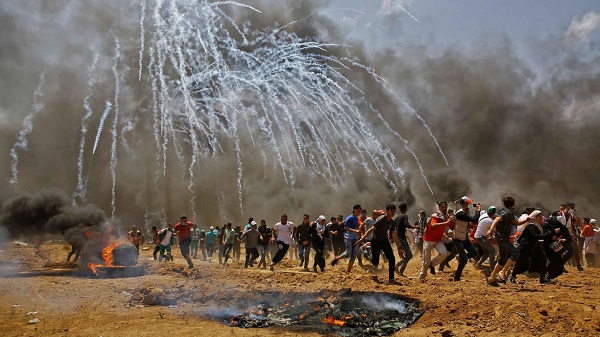
Egypt Daily News – In a damning exposé, Israel’s Haaretz newspaper has revealed that the Israeli military has issued direct orders to open fire on unarmed Palestinian civilians gathering around aid distribution points in Gaza. These revelations, confirmed by several Israeli soldiers and officers, shed light on what appears to be a systematic policy of targeting desperate civilians in search of food and humanitarian relief.
Over the past month, Israeli troops were instructed to shoot at Palestinians near the few remaining humanitarian aid centers, according to testimonies collected by Haaretz. Soldiers admit that they opened fire intentionally sometimes with heavy weaponry on people approaching these centers outside of their brief daily operating hours. These actions were allegedly justified as a means of dispersing crowds, despite no apparent threat being posed by the civilians.
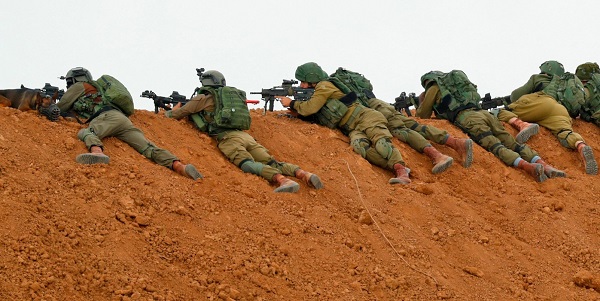
“The story is that there’s a total loss of any moral restraint regarding the use of weapons in Gaza,” one soldier told Haaretz, describing the scene at the aid sites as “execution grounds.” He added, “People are gunned down like enemy combatants. We don’t use tear gas or rubber bullets, we use heavy machine guns, grenade launchers, even mortars.”
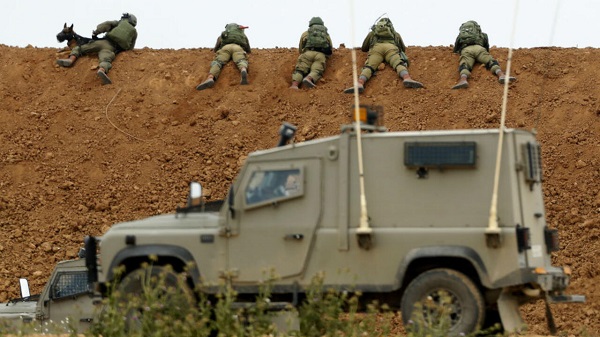
According to the same source, this practice occurs in darkness before the centers open, with many civilians unaware of their boundaries due to the lack of lighting. “They shoot at people lining up hundreds of meters away, early in the morning, sometimes at close range,” the soldier said. “There’s no enemy here, no weapons. Just hungry people.”
Another soldier grimly referred to the operation as “Military Operation Salted Fish”, a macabre nickname alluding to the Palestinian diet in siege conditions.
Israeli military prosecutors have reportedly called for an investigation into these incidents, which may constitute war crimes. However, no public accountability has been made, and video documentation from the aid distribution zones has not been released by the army.
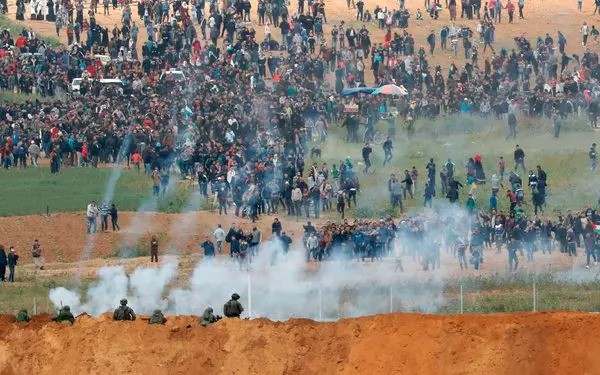
According to Gaza’s Government Media Office, more than 550 civilians have been killed and over 4,000 injured by Israeli fire near aid distribution centers since late May. These numbers include over 100 killed in a single day as civilians waited before dawn for aid at U.S.-backed distribution sites.
The humanitarian centers, run by the so-called “Gaza Humanitarian Foundation” under a controversial Israeli-American coordination mechanism, operate under Israeli military supervision for only one hour per day. The system has been widely condemned as chaotic, inadequate, and deadly. According to Haaretz, the centers often fail to open on time or at all, leading to further confusion and desperation.
Palestinian health officials report that airstrikes have compounded the carnage, with tents housing displaced people in areas like Sheikh Radwan, Al-Mawasi, and Jabalia struck from the air, killing dozens more.
International reaction has been swift. UN officials have strongly condemned the attacks on aid seekers. Philippe Lazzarini, Commissioner-General of UNRWA, described the situation in Gaza as “a grotesque peak of 20 months of impunity,” where desperate people are “herded into ghetto-like zones and shot at for seeking food.”
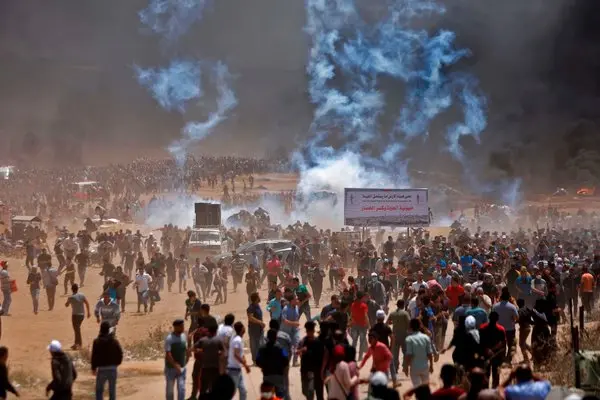
UN High Commissioner for Human Rights Volker Türk said, “Shooting starving people is horrifying and unjustifiable under any circumstance.” He accused Israel of engaging in the “systematic destruction of life-sustaining conditions” in Gaza, warning that forced starvation of civilians constitutes a war crime.
Despite the growing outcry, the Israeli government remains defiant. Since mid-March, Israel has enforced a complete closure of Gaza’s border crossings. Far-right ministers, including National Security Minister Itamar Ben Gvir, have argued that halting aid is essential to “winning the war,” insisting that food shipments “strengthen Hamas.”
Meanwhile, Washington continues to back the faltering aid mechanism with additional funding most recently, a $30 million pledge despite its lethal consequences on the ground.
As hunger tightens its grip and international appeals go unanswered, Gaza’s civilians remain caught in the crosshairs—punished not for resistance, but for the simple act of queuing for bread.
