

Ahmed Kamel – Egypt Daily News
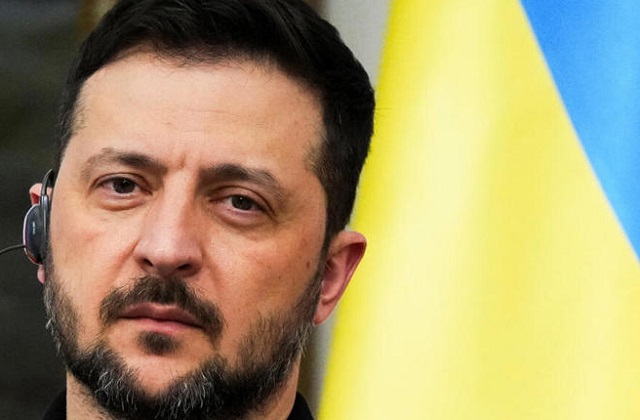
Ukrainian President Volodymyr Zelensky said on Tuesday that he is prepared to meet Russian President Vladimir Putin “in any format” if it would help bring an end to the war, signaling renewed openness to high-level talks even as tensions between Kyiv and Moscow escalated over disputed claims of a drone attack.
Speaking to journalists during an online conversation conducted via WhatsApp, Zelensky said Ukraine remains committed to continued negotiations on how to end the conflict, which has now entered its fourth year. According to Reuters, he emphasized that Kyiv is willing to explore all diplomatic avenues, including direct engagement with the Russian leader, despite the absence of formal peace talks between the two sides.
Zelensky also said that Ukraine plans to discuss the possible presence of U.S. forces on Ukrainian territory with U.S. President Donald Trump as part of broader security guarantees. Such guarantees, Ukrainian officials argue, are essential to prevent future Russian aggression once active hostilities end.
The comments came on the same day Ukraine rejected Russian accusations that Kyiv was behind an alleged drone attack targeting a residence used by President Putin. Ukrainian officials dismissed the claim as unfounded and politically motivated, accusing Moscow of attempting to influence the trajectory of ongoing peace efforts.
Ukraine’s Foreign Minister Andrii Sybiha said in a post on the social media platform X that Russia had failed to provide any credible evidence to support its allegations. “Nearly a day has passed and Russia has not presented a single reasonable piece of evidence for its accusations of an alleged drone attack on Putin’s residence,” Sybiha wrote. “It will not do so, because there is no evidence. No such attack took place.”
The Kremlin responded sharply, rejecting both Ukraine’s denials and skepticism from Western media. Kremlin spokesman Dmitry Peskov described efforts to question the incident as “absurd” and said Russia was under no obligation to provide proof. According to Peskov, all drones involved in the alleged attack were intercepted by Russian air defenses.
“I do not believe it is necessary to present evidence of such a large-scale drone attack,” Peskov told reporters. “All the drones were shot down thanks to the well-coordinated work of the air defense system.”
Peskov declined to disclose Putin’s whereabouts at the time of the incident, citing security concerns. He said recent developments made it impossible to comment on such details.
The accusation has emerged at a particularly sensitive moment in the conflict. Ukrainian officials say Kyiv has agreed to roughly 90 percent of a U.S.-backed peace framework, including provisions related to post-war security guarantees. These guarantees could involve long-term military assistance, defense cooperation, or the presence of foreign forces, though specifics remain under discussion.
Russia, however, has shown reluctance to accept any agreement that does not fully address its own demands, which include limits on Ukraine’s military capabilities and a rejection of NATO membership for Kyiv. The Kremlin indicated on Tuesday that it would take a tougher stance in negotiations in response to the alleged drone attack.
“For us, this means a tightening of our position,” Peskov said. “As for military consequences, our armed forces know how to respond, with what means, and at what time.”
Since Russia launched its full-scale invasion of Ukraine in February 2022, direct talks between Zelensky and Putin have not taken place. Zelensky has previously ruled out negotiations with the Russian leader while Putin remains in power, particularly after Russia’s formal claims over occupied Ukrainian territories. His latest remarks, however, suggest a pragmatic shift driven by mounting battlefield pressures, war fatigue, and increasing international focus on a negotiated settlement.
Analysts say Zelensky’s willingness to meet Putin in any format does not necessarily signal imminent talks, but rather reflects Ukraine’s effort to present itself as flexible and committed to peace, especially in the eyes of its Western allies. At the same time, the sharp exchange over the alleged drone attack underscores how fragile the diplomatic environment remains, with both sides accusing each other of bad faith as they maneuver for leverage.
As fighting continues along multiple fronts and civilian casualties mount, the prospects for a breakthrough remain uncertain. Yet Zelensky’s statement suggests that, despite deep mistrust and ongoing hostilities, Kyiv is leaving the door open, however narrowly to direct dialogue if it offers a realistic path toward ending the war.
