

Ahmed Kamel – Egypt Daily News
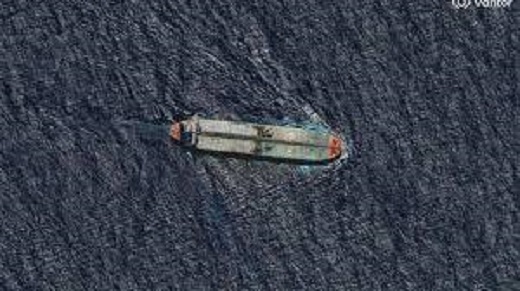
U.S. military forces have stopped a second merchant vessel off the coast of Venezuela in less than two weeks, American officials said on Saturday, signaling a further escalation in President Donald Trump’s campaign to increase pressure on Venezuelan President Nicolás Maduro.
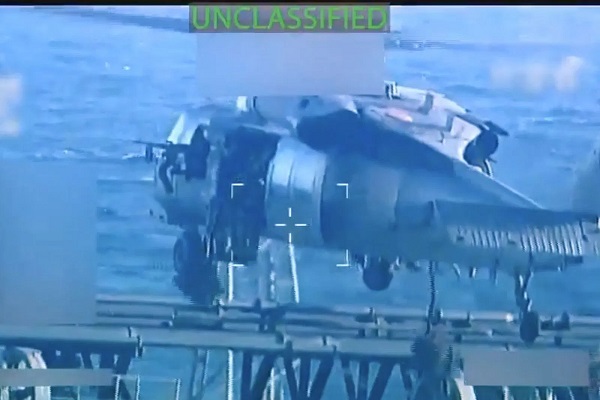
The latest interception comes days after Trump announced what he described as a “blockade” of oil tankers subject to U.S. sanctions traveling to or from Venezuela. It also follows the December 10 seizure of an oil tanker off the Venezuelan coast by U.S. forces, the first such action under the new policy.
Two U.S. officials familiar with the matter confirmed the operation, speaking on condition of anonymity because they were not authorized to discuss ongoing military activities publicly. One of the officials characterized the latest incident as a “consented boarding,” saying the vessel voluntarily stopped and allowed U.S. forces to come aboard. Neither the Pentagon nor the White House immediately responded to requests for comment.
Trump has sharply intensified his rhetoric against Maduro in recent weeks, repeatedly suggesting that the Venezuelan leader’s grip on power is weakening. Earlier this month, the president demanded that Venezuela return assets seized from U.S. oil companies years ago, citing those losses as a justification for the new pressure campaign against oil tankers linked to the country.
“We’re not going to be letting anybody go through who shouldn’t be going through,” Trump told reporters earlier this week. He accused Venezuela of illegally taking U.S. energy assets, saying Washington wants them returned.
U.S. oil companies once dominated Venezuela’s petroleum sector before it was nationalized, first in the 1970s and later under Hugo Chávez and his successor, Maduro. Compensation disputes have lingered for years. In one prominent case, an international arbitration panel in 2014 ordered Venezuela to pay $1.6 billion to ExxonMobil, ruling that the compensation offered during nationalization was inadequate.
The renewed targeting of vessels near Venezuela is also unfolding alongside a broader U.S. military campaign in the Caribbean and eastern Pacific, where Trump has ordered the Defense Department to carry out strikes on boats his administration alleges are involved in smuggling fentanyl and other illegal drugs into the United States and elsewhere.
According to available data, at least 104 people have been killed in 28 known strikes since early September. The operations have drawn criticism from some U.S. lawmakers and human rights groups, who argue that the administration has provided limited evidence that the targeted vessels were engaged in drug trafficking and warn that the strikes amount to extrajudicial killings.
Traditionally, the U.S. Coast Guard sometimes supported by the Navy has intercepted suspected drug-smuggling vessels, searched them for illicit cargo, and detained those on board for prosecution. The Trump administration, however, has defended the more aggressive approach by asserting that the United States is engaged in an “armed conflict” with drug cartels and must act decisively to stem the flow of narcotics. Maduro himself faces U.S. federal charges related to narcoterrorism.
In recent months, the United States has deployed a large concentration of naval forces to the region, marking the most significant military buildup there in generations. Trump has repeatedly hinted that further escalation, including potential land-based operations, could follow.
Maduro has dismissed Washington’s stated rationale, insisting that the real objective of the U.S. military actions is to remove him from power. That view was echoed bluntly by White House Chief of Staff Susie Wiles, who said in a recent interview with Vanity Fair that Trump “wants to keep on blowing boats up until Maduro cries uncle.”
As U.S. forces continue to intercept vessels and sanctioned tankers reportedly divert away from Venezuelan waters, the standoff between Washington and Caracas appears to be entering a more confrontational phase, raising concerns about regional stability and the risk of further escalation.
