

Ahmed Kamel – Egypt Daily News
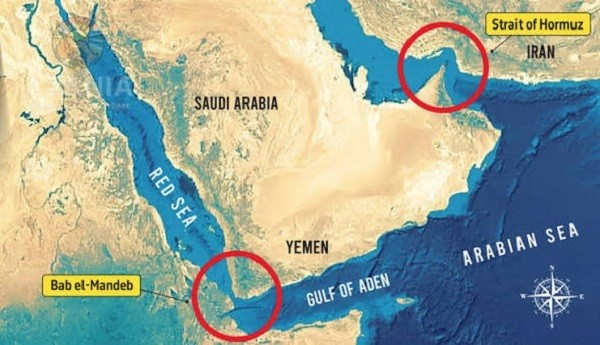
Yemeni government forces have claimed control of strategic positions around the Bab al-Mandab Strait and the nearby district of Dhubab, announcing the capture of a local airport and the severing of a key road linking the area with the Red Sea port of Mokha. The reported advances came as the internationally recognized government launched a broad military campaign against the Houthi movement, supported by Saudi-led coalition airpower.
The operation, described by Yemen’s Presidential Leadership Council as “Dawn of Yemen,” represents the most significant attempt in years to reverse Houthi territorial gains along the country’s western coast. Government officials said the campaign is intended not only to retake the Bab al-Mandab area but also to restore state institutions and eventually challenge Houthi control of the capital, Sana’a.
According to Yemeni military spokesman Maj. Gen. Majed Abdullah Al-Nuzaili, forces from the Southern Giants Brigades and the Nation’s Shield formations carried out a flanking maneuver that enabled them to reach positions overlooking the strategic maritime passage. Government forces also claimed control of the Dhubab airport and said they had cut the road between Dhubab and Mokha, establishing fire control over the route.
The military said hundreds of Houthi fighters had become surrounded in the Dhubab area and were urged to surrender. Some fighters reportedly escaped by boat, although details about the number of people who fled and the current status of the surrounding positions remained unclear. The Houthi movement rejected the government’s claims, describing reports of territorial gains as fabricated and portraying the offensive as an attempt to conceal battlefield setbacks.
The competing statements could not be independently verified. The conflicting accounts reflect the difficulty of assessing developments in Yemen, where military factions often release sharply different versions of events and access to front-line areas is severely restricted.
The Saudi-led coalition said it was providing continuous air support to the Yemeni forces. Coalition spokesman Maj. Gen. Turki Al-Malki said 100 fighter jets had taken part in the opening phase of the offensive and that 324 high-value targets had been destroyed. He added that the coalition was providing air protection for the Bab al-Mandab Strait while continuing to strike Houthi military positions and moving targets.
The Yemeni military also reported carrying out 1,122 strikes or targeting operations against Houthi positions, movements and supply lines in Saada, Al-Jawf, Taiz and other areas. Al-Nuzaili claimed that the operations had killed or otherwise “neutralized” 1,747 Houthi personnel and destroyed or disabled 364 military vehicles, pieces of equipment and supply transports. Those figures were issued by the government and have not been independently confirmed.
The wider offensive is unfolding across several fronts. Government forces are attempting to consolidate their positions along the Red Sea coast while also applying pressure in Taiz and northern governorates. The campaign follows a Houthi offensive that reportedly enabled the movement to seize large sections of the western coastline, including areas near Mokha and the Bab al-Mandab passage.
The strait is one of the world’s most important maritime chokepoints, connecting the Red Sea with the Gulf of Aden and providing access to the Suez Canal. Any sustained disruption could affect commercial shipping, energy deliveries and humanitarian supplies moving toward Yemen, Sudan and other countries in the region. Analysts have cautioned, however, that gaining ground near the strait does not necessarily translate into permanent control of the maritime passage. The area includes rugged terrain, islands and competing military formations with different political loyalties.
The government’s battlefield claims also came alongside reports of attacks on Sana’a. Houthi-run media reported airstrikes in and around the capital, while local authorities attributed civilian casualties to some of the strikes. Government forces described the attacks as part of a strategic campaign against Houthi military capabilities and said the broader objective was to restore control over state institutions.
President Rashad Al-Alimi framed the offensive as a decisive phase in the struggle to rebuild a unified Yemeni state. He said the campaign was directed at Houthi military forces rather than civilians living in areas under their control. Government officials also called on Houthi fighters to abandon their positions and return to their homes.
The renewed fighting has already intensified Yemen’s humanitarian crisis. United Nations agencies reported that nearly 100,000 people had been displaced during the first weeks of the escalation, while later estimates indicated that the overall number had risen further. Thousands of Yemenis crossed the Bab al-Mandab Strait toward Djibouti, many of them women, children and older people fleeing bombardment and ground fighting.
Humanitarian agencies have warned that aid deliveries are being disrupted by damaged roads, insecurity, telecommunications outages and restrictions on movement. Damage to the port of Mokha has further complicated the movement of relief supplies. The United Nations has also cautioned that prolonged insecurity around the maritime corridor could increase shipping costs and delay emergency deliveries, forcing some vessels to take longer routes around the Cape of Good Hope.
The military developments therefore carry consequences far beyond the immediate battlefield. If government forces consolidate control of Dhubab, Mokha and the approaches to Bab al-Mandab, the Houthis could lose an important strategic position and a major source of leverage over regional shipping. If the front lines remain unstable, however, the offensive could instead deepen Yemen’s fragmentation, produce another wave of displacement and draw outside powers more directly into the conflict.
For now, the reported capture of Bab al-Mandab remains a government claim contested by the Houthis. The next phase of fighting, particularly around Mokha, Taiz and the routes leading inland, will determine whether the operation marks a lasting shift in Yemen’s war or only a temporary change in the balance of forces.
