

Ahmed Kamel – Egypt Daily News
Russia launched one of its largest aerial assaults on Ukraine in recent months, firing hypersonic missiles and hundreds of drones in a coordinated overnight attack that struck Kyiv and multiple regions, killing civilians, crippling energy infrastructure, and prompting Ukrainian authorities to urge residents of the capital to leave temporarily amid a deepening winter heating crisis.
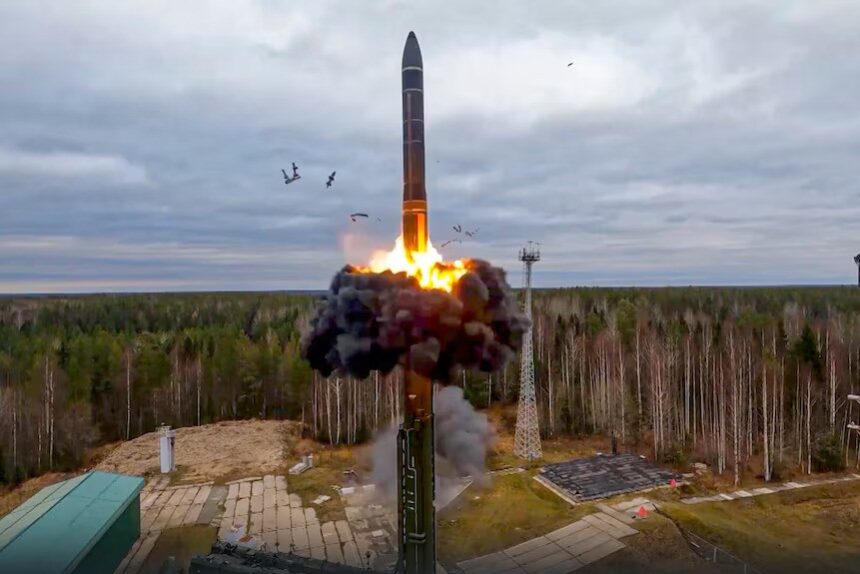
According to Ukraine’s Air Force, Russian forces launched 36 missiles and 242 drones during the overnight assault, including a hypersonic ballistic missile of the “Oreshnik” type. Ukrainian air defenses intercepted 226 drones and 18 missiles, but several projectiles penetrated defenses, causing widespread damage. At least four people were killed, including a rescue worker, and 24 others were wounded, officials said.
President Volodymyr Zelensky said the strikes deliberately targeted energy facilities and civilian infrastructure in Kyiv and surrounding areas. Among the damaged sites was the building housing Qatar’s embassy in the Ukrainian capital, though Qatari officials later confirmed that all diplomatic staff were safe and no injuries were reported.
In a statement posted on social media, Zelensky called for a “clear response” from the international community, particularly the United States, urging Western allies to hold Russia accountable for what he described as the continued killing and destruction of civilian life. Ukrainian Foreign Minister Andrii Sybiha warned that the attacks, carried out near the borders of the European Union and NATO, constituted a serious threat to European security and a test of the Atlantic alliance’s resolve.
Russia’s Ministry of Defense said the strikes were conducted overnight Thursday into Friday and targeted what it described as “strategic objectives” in Ukraine. Moscow claimed the operation was a response to what it called a “terrorist attack” by Kyiv against a facility linked to President Vladimir Putin in late December an allegation Ukraine has firmly denied.
The use of hypersonic weaponry added to the alarm. Russian officials said the Oreshnik missile is capable of speeds exceeding Mach 10, or more than 12,000 kilometers per hour, and can carry either conventional or nuclear warheads. Ukrainian military officials described the strike as a deliberate signal to Western allies, framing it as a test of their willingness to sustain military and political support for Kyiv. Russia first acknowledged using the Oreshnik missile in combat in 2024, when it was deployed with conventional warheads against the city of Dnipro.
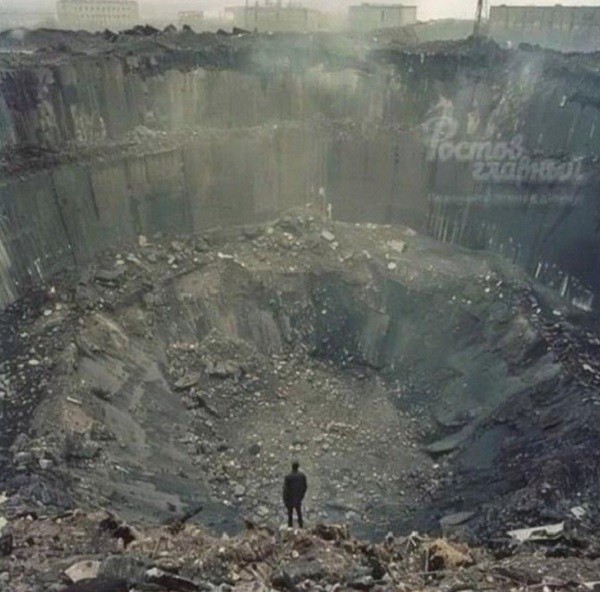
The impact on Kyiv’s civilian infrastructure was severe. Mayor Vitali Klitschko said Russian strikes damaged critical facilities, cutting heating supplies to roughly half of the city’s residential buildings nearly 6,000 structures, as temperatures plunged to minus eight degrees Celsius and were expected to fall further. Electricity outages were also reported across several districts, while at least 20 residential buildings sustained damage.
In an unusually stark appeal, Klitschko urged residents with the means to leave the capital temporarily and relocate to areas with alternative sources of power and heating. “Half of Kyiv’s residential buildings are currently without heating due to damage to vital infrastructure caused by a large-scale enemy attack,” he said, warning that conditions could worsen as the cold intensifies.
Elsewhere, western Ukraine was also hit. The city of Lviv came under a nighttime missile strike that targeted unspecified critical infrastructure, according to Mayor Andriy Sadovyi and regional governor Maksym Kozytskyi. While no casualties were reported there, Ukrainian air force officials said the attack involved a hypersonic ballistic missile traveling at speeds of up to 13,000 kilometers per hour.
Across central Ukraine, continued Russian strikes on power facilities left more than one million people without water and heating following earlier attacks earlier in the week, underscoring the sustained pressure on Ukraine’s energy grid during the winter months.
Ukraine has simultaneously intensified its own strikes against Russian infrastructure. Authorities in Russia’s Belgorod region, bordering Ukraine’s Kharkiv region, said Ukrainian attacks disrupted electricity and heating supplies for approximately 556,000 residents. Regional governor Vyacheslav Gladkov acknowledged significant outages as temperatures dropped, highlighting the growing cross-border impact of the conflict.
The latest escalation unfolded against a backdrop of stalled diplomacy. Peace efforts initiated by US President Donald Trump in recent months have made little visible progress, while tensions between Russia and Western governments continue to rise.
Moscow has rejected a European-backed proposal to deploy a multinational force to help guarantee Ukraine’s security in the event of a future ceasefire. Russian Foreign Ministry spokeswoman Maria Zakharova described the initiative, promoted by what she called the “coalition of the willing” alongside the Ukrainian government as forming a “real axis of war.”
Zakharova warned that any Western military presence on Ukrainian territory would be considered a legitimate target for Russian forces, stating that all such units and installations would be treated as lawful military objectives. She characterized the proposed plans as dangerous and destabilizing.
Earlier this week, representatives from 35 countries, most of them European, met in Paris with US backing to discuss the potential deployment of a multinational force to monitor a possible ceasefire should an agreement with Russia be reached.
As winter deepens and diplomatic avenues remain blocked, the renewed use of hypersonic missiles, the targeting of civilian energy infrastructure, and calls for temporary evacuation in Kyiv underline how the war is entering an increasingly perilous phase one marked by escalating military technology, mounting humanitarian strain, and hardening geopolitical fault lines.
