
Egypt is preparing to tighten government spending and expand its reserves of essential goods as officials assess how a worsening regional crisis could affect prices, energy supplies and the wider economy.
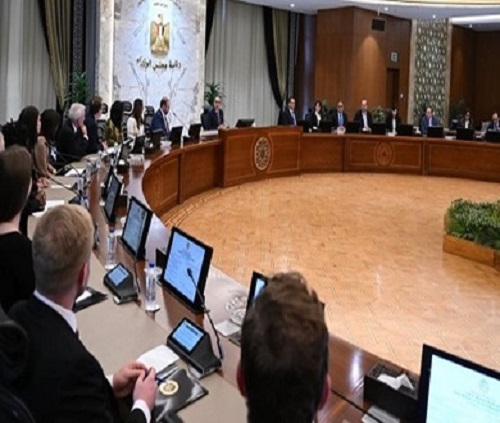
The plan emerged from a meeting of the Central Crisis Management Committee chaired by Prime Minister Mostafa Madbouli in the New Administrative Capital. The gathering brought together the central bank governor and ministers responsible for finance, planning, supply, agriculture, electricity, petroleum and industry, among other officials.
The government’s immediate concern is to be ready for several possible developments, rather than wait for a single crisis scenario to unfold. Madbouli said authorities were tracking geopolitical tensions and their effects on both global and domestic markets. The response under preparation has two main parts: build up stocks of goods and limit public-sector consumption and expenditure.
Officials described the spending plan as an effort to use public money more efficiently, not to interrupt economic activity. Finance Minister Ahmed Kouchouk and Planning Minister Ahmed Rostom told the committee they were finalizing a comprehensive proposal. They said it would preserve financing for essential goods and petroleum products used by households and businesses, while maintaining support for economic and productive activity.
The announcement did not specify which budget items could be trimmed or how much the government expects to save. Nor did officials provide a date for the plan’s completion. For now, the stated direction is to curb government spending and reduce public-sector use of fuel and energy without undermining the supply of necessities or the work of producers.
That balance is central to the government’s preparations. A spending squeeze that disrupts production or limits access to fuel could deepen economic pressure; failing to control costs, meanwhile, could leave public finances more exposed if regional instability pushes up prices or disrupts trade.
The supply position was a major part of the committee’s review. Supply Minister Sherif Farouk said Egypt’s strategic reserves of essential commodities were sufficient, on average, for six months. He added that stocks of some goods covered a longer period, and said new procurement contracts were being arranged to increase reserves further. The minister also presented figures on stock levels, though the government’s announcement did not disclose those quantities.
The authorities are also relying on a price-reduction initiative to help consumers. It currently covers 30 basic goods, sold through outlets around the country at discounts of 15% to 25% compared with market prices, Farouk said. The government is working with relevant agencies to extend the outlets’ geographic coverage.
Those discounts offer a direct consumer-facing element to a response otherwise centered on government procurement and budget management. Broader access to participating outlets could matter as much as the discount itself: a price cut has limited value to families who cannot readily find the goods on offer.
The measures address several risks at once. Larger inventories could help cushion supply disruptions; new contracts could replenish stocks; and reduced government fuel and energy use could conserve resources. The price initiative is intended to provide some relief to shoppers, while the proposed spending framework aims to preserve public funding for essential supplies.
But the committee has not yet published enough detail to show how the different parts will work in practice. The size of the planned spending reductions, the goods targeted for additional procurement, and the timeline for implementing the framework remain unclear. Officials have presented the approach as contingency planning, not as evidence that shortages have occurred.
The range of officials at the meeting reflected the breadth of the challenge. Food supplies, petroleum products, electricity, agriculture, industry and public finances could all be affected by changes in regional conditions and international markets. The government’s objective, Madbouli said, is to prepare for different outcomes and soften any economic consequences.
For households, the key questions will be whether essential goods remain available and whether the discounted outlets are accessible. For businesses, the government has promised to protect the supply of petroleum products and preserve funding needed for production. For public agencies, the direction is clearer: conserve fuel and energy, and scrutinize expenditure more closely.
The plan’s success will depend on those commitments being reconciled. Egypt wants larger reserves and continued support for essential goods while also cutting government consumption and making public resources go further. The committee has set out the priorities; the detailed spending framework and its implementation will determine how those priorities translate into action.
