

Ahmed Kamel – Egypt Daily News
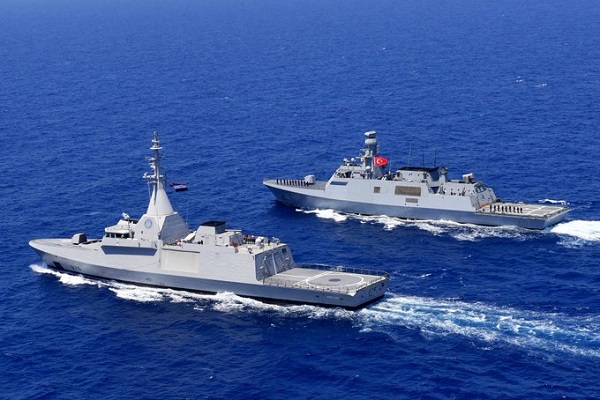
In a striking sign of thawing relations after a decade of diplomatic and military estrangement, Egypt and Turkey are set to conduct joint naval exercises in the Eastern Mediterranean for the first time in 13 years. The drills, titled “Sea of Friendship”, are scheduled to take place from September 22 to 26, and mark a significant milestone in the normalization of ties between the two regional powers.
The announcement came during a press conference by Turkish Defense Ministry spokesperson Zeki Aktürk, who described the exercises as a concrete step toward bolstering operational coordination and strategic trust between the Egyptian and Turkish navies.
“These drills aim to enhance bilateral relations and ensure interoperability between our naval forces,” said Aktürk, emphasizing that the exercises reflect “a shared desire to advance security and defense cooperation in a region of critical strategic importance.”
Strategic Assets on Display
According to the Turkish Ministry of Defense, a robust contingent from Turkey’s naval and air forces will participate in the exercises, including:
- Frigates TCG Oruç Reis and TCG Gediz
- Fast attack craft TCG İmbat and TCG Bora
- Submarine TCG Gür
- Two F-16 fighter jets from the Turkish Air Force
While Egypt has confirmed its participation, the specific units and assets from the Egyptian Navy have yet to be disclosed. Details are expected to be released closer to the start of the drills.
A symbolic and politically significant moment is scheduled for September 25, when the Turkish and Egyptian naval chiefs will jointly attend the “Distinguished Visitor Day”, a ceremonial event typically reserved for top-level military and political representatives. The joint presence of both commanders signals not only military cooperation but also leadership-level alignment in a region where symbolism carries weight.
From Rivalry to Rapprochement
The last time Egypt and Turkey held such military exercises was more than a decade ago, before relations deteriorated sharply following the political upheaval in Egypt in 2013. In the years that followed, the two countries found themselves at odds across multiple regional arenas, from Libya and Syria to the Eastern Mediterranean where they supported opposing alliances and competed over maritime boundaries and energy resources.
But recent months have seen a dramatic recalibration. A flurry of diplomatic activity, including reciprocal visits by the Turkish and Egyptian foreign and defense ministers, has laid the groundwork for deeper engagement. Both nations have signed new agreements in energy, trade, and investment, and have publicly expressed intentions to leave past tensions behind.
Choosing the Eastern Mediterranean as the venue for the drills is no coincidence. Once a flashpoint for conflict particularly over maritime demarcation and offshore gas exploration, the region now serves as a deliberate platform for strategic reassurance. The message, analysts suggest, is clear: the two countries are shifting from confrontation to cooperation.
“This move carries a strong political and security signal that Egypt and Turkey are serious about transforming a contested maritime zone into a shared zone of stability,” said a regional security analyst.
A Broader Regional Message
The timing of the exercises also aligns with a broader trend of regional realignment. Across the Middle East and Eastern Mediterranean, former rivals are mending ties, from the recent rapprochement between Saudi Arabia and Iran, to renewed diplomatic dialogue between Israel and Arab states before the escalation in Gaza.
For both Ankara and Cairo, cooperation in the Eastern Mediterranean could unlock mutual benefits from economic gains in energy development to shared influence in regional security architectures. The joint drills also send a calming message to international partners, including NATO and the EU, who have long called for de-escalation in the region.
While much remains to be seen regarding the durability of the rapprochement, the “Sea of Friendship” exercise represents more than just military coordination, it is a symbol of shifting alliances, pragmatic diplomacy, and the potential for long-term strategic cooperation between two of the region’s most influential players.
