

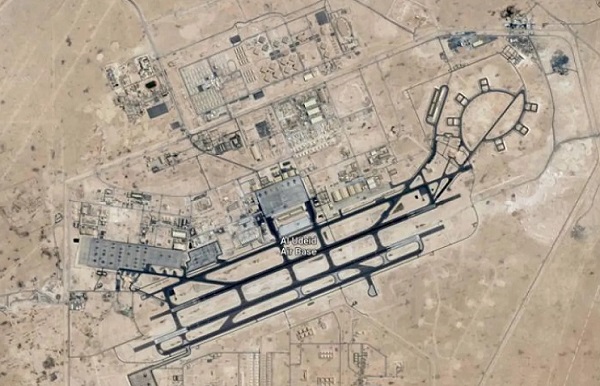
Egypt Daily News – Tensions in the Middle East escalated dramatically Monday as Iran launched a barrage of missiles at U.S. military bases in Qatar and Iraq, in retaliation for a U.S. airstrike over the weekend targeting Iranian nuclear facilities. The offensive marked one of the most direct and consequential confrontations between Tehran and Washington in recent years.
At least ten missiles were launched toward Al Udeid Air Base in Qatar, the largest U.S. military installation in the region and home to over 10,000 American personnel, strategic bombers, and the Combined Air Operations Center. Simultaneously, bases in Iraq and Kuwait were placed on high alert, and air raid sirens were triggered across several U.S. installations, according to defense sources.
Aerial defenses were quickly activated following an early warning of a “credible threat” to the base. Eyewitnesses in Doha reported hearing loud explosions and seeing interceptor missiles streaking through the night sky, a spectacle reminiscent of Israel’s Iron Dome system.
Qatar’s Ministry of Defense confirmed that its air defenses had successfully intercepted the missiles. “We reassure that Qatar’s air defenses thwarted the attack and intercepted the Iranian missiles. There were no casualties,” a statement read. The Qatari Foreign Ministry condemned the attack as a “flagrant violation” of its sovereignty and international law, adding that the nation reserves the right to respond proportionately.
The missile strikes followed the U.S. use of 30,000-pound bunker-buster bombs on Iranian nuclear facilities on Saturday night. President Donald Trump, who has faced growing international criticism over the attack, later raised the possibility of regime change in Iran—comments that provoked fury in Tehran.
In a statement on state television accompanied by martial music, Iran’s Islamic Revolutionary Guard Corps (IRGC) described the missile launch as “a mighty and successful response by the armed forces of Iran to America’s aggression.” Iranian President Masoud Pezeshkian posted on social media that the U.S. would not go unpunished for its “aggression,” vowing, “We will respond to every wound on Iran’s body with faith, wisdom, and determination.”
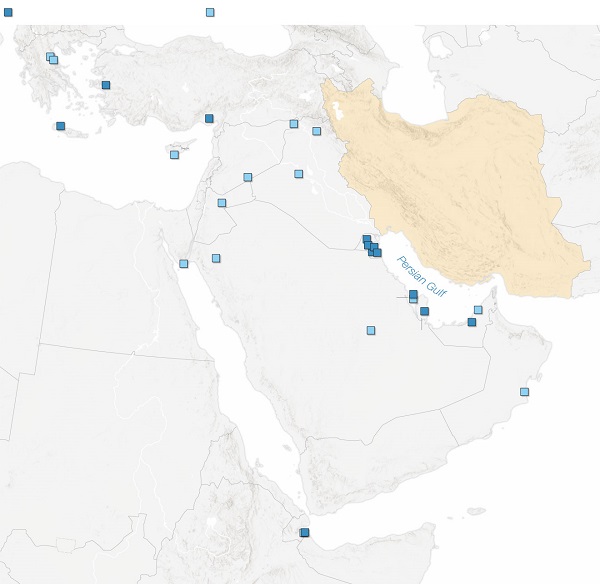
Iranian officials warned that the U.S., Israel, the U.K., France, and the director of the International Atomic Energy Agency would all “bear full responsibility for the death of innocent civilians” in Iran. Meanwhile, Iranian state media threatened that up to 50,000 U.S. soldiers could be “returned to Washington in coffins” if hostilities escalate.
In parallel developments, Israel reportedly launched a large-scale assault on “regime targets” in Tehran on Monday. Iranian sources claimed that “hundreds” of IRGC personnel were killed in the coordinated strikes.
The Pentagon confirmed that Defense Secretary Pete Hegseth and Joint Chiefs Chairman Gen. Dan Caine were in the White House Situation Room as the attacks unfolded. U.S. embassies in Qatar and Bahrain placed personnel in “duck and cover” positions amid fears of additional incoming strikes.
The White House remains on high alert, with President Trump convening his National Security Council. The Marine guard stationed outside the West Wing—indicating the president’s presence—was seen shortly after news of the missile strikes broke.
Qatar, while condemning Iran’s actions, also called for restraint. “We will continue pushing for diplomatic efforts and a serious return to the negotiating table,” Foreign Ministry spokesperson Majed al-Ansari said. However, the scale of the latest hostilities suggests that a broader regional conflict may be imminent.
As of Monday evening, no fatalities were reported, but the situation remains fluid. The full extent of the damage at Al Udeid is still being assessed.
The U.S. military has not yet formally responded, though officials have reiterated their commitment to protecting American personnel and interests in the region.
