

Ahmed Kamel – Egypt Daily News
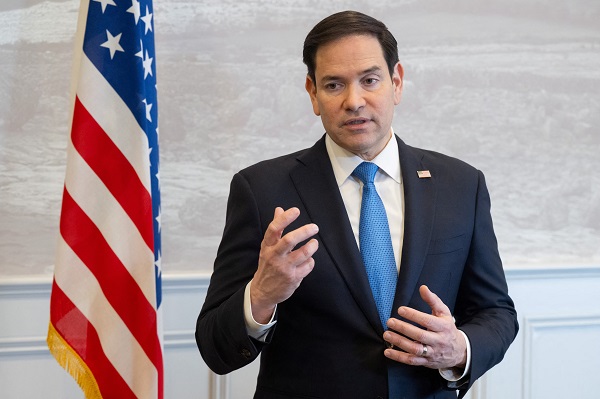
U.S. Secretary of State Marco Rubio reaffirmed Washington’s unwavering commitment to Taiwan on Saturday, declaring that the United States would not compromise its principles or strategic alliances in pursuit of a trade agreement with China.
Speaking to reporters, Rubio dismissed speculation that Taiwan could be used as a bargaining chip in the ongoing U.S.–China trade discussions. “I don’t believe we’ll see a trade agreement if that’s what people are expecting, nor will we secure favorable trade terms in exchange for abandoning Taiwan. No one is even considering that,” he said, according to Western media reports.
His comments came as trade negotiations between American and Chinese delegations were reported to have begun in Kuala Lumpur. The talks precede a planned meeting next week between U.S. President Donald Trump and Chinese President Xi Jinping, in what observers describe as a critical moment for the world’s two largest economies.
Earlier this month, President Trump stated that the United States was already “in the midst of a trade war” with China. During a White House press conference, he said, “We’re right in the middle of it,” responding to questions about whether tensions could escalate further.
The Chinese Embassy in Washington, meanwhile, told Sputnik that Beijing remains “ready both for negotiations and for a trade war” with the United States.
On October 9, China’s Ministry of Commerce announced it would impose export controls on several strategic materials, including medium and heavy rare earth elements, lithium batteries, synthetic graphite anode materials, and equipment used in rare earth mining and processing. These restrictions are scheduled to take effect on November 8.
In response, President Trump announced on October 10 that the United States would impose a 100 percent tariff on goods imported from China beginning November 1, or earlier if necessary. The move would double the current tariff levels, with Trump citing what he called “China’s aggressive trade practices.”
U.S. Treasury Secretary Scott Bissont later indicated that Washington might delay some of the new tariffs to allow for high-level dialogue between the two countries’ leaders.
Throughout 2025, Washington and Beijing have held several rounds of trade talks in Europe in an effort to resolve long-standing tariff and market-access disputes. However, despite occasional signs of progress, both sides remain far apart on key issues, including technology transfer, industrial subsidies, and intellectual property protections.
Rubio’s remarks underscore the Biden administration’s (or Trump’s, depending on your framing of this fictional timeline) broader strategic stance that economic engagement with Beijing will not come at the expense of U.S. security commitments or democratic partnerships in the Indo-Pacific particularly with Taiwan, which remains a central flashpoint in U.S.–China relations.
