

Ahmed Kamel – Egypt Daily News
Egypt has intensified its diplomatic engagement on the Iran–US negotiations, holding a series of high-level phone calls with Saudi Arabia, Iran, and Qatar aimed at reducing regional tensions and preventing a wider escalation in the Middle East.
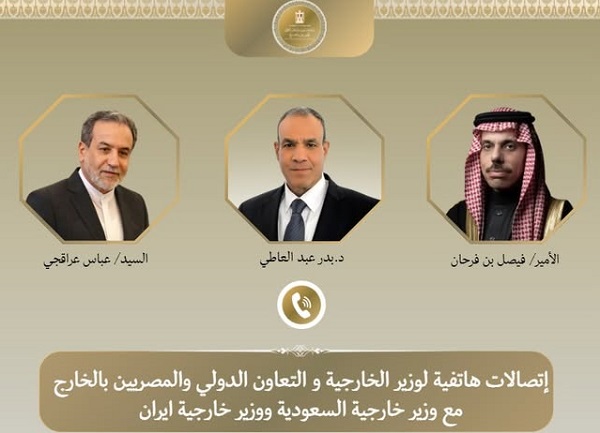
Foreign Minister Badr Abdel Aty spoke separately over the weekend with Saudi Foreign Minister Prince Faisal bin Farhan, Iranian Foreign Minister Abbas Araghchi, and Qatar’s Prime Minister and Foreign Minister Sheikh Mohammed bin Abdulrahman Al Thani, according to statements from Egypt’s Foreign Ministry.
The discussions focused heavily on the ongoing indirect talks between Washington and Tehran, as well as broader regional developments that have raised concerns among governments across the Middle East.
Regional powers push for de-escalation
In his call with the Saudi foreign minister on Saturday, Abdel Aty reviewed the latest diplomatic efforts surrounding the Iran–US negotiations and exchanged views on how to contain rising tensions in the region. Both sides stressed the importance of reducing escalation risks and avoiding actions that could destabilize regional security.
Cairo and Riyadh also underscored the need to expand diplomatic engagement and prioritize dialogue as the only viable path for resolving outstanding disputes, according to the Egyptian Foreign Ministry. The tone of the discussions reflected shared concerns among regional capitals over the fragile security environment and the potential spillover effects of stalled or failed negotiations.
Iran briefed on negotiation developments
A separate call between Abdel Aty and Iranian Foreign Minister Abbas Araghchi centered on updates from the ongoing talks between Tehran and Washington, which are being facilitated through intermediaries. According to the Iranian side, Araghchi briefed his Egyptian counterpart on the latest progress in the negotiations and efforts to reach a mutually acceptable framework.
Egypt, in response, reiterated its support for continued diplomatic engagement, stressing that any breakthrough in talks would be crucial in easing tensions and preventing further escalation in an already volatile regional landscape.
Qatar consultation highlights unified diplomatic messaging
Later, Abdel Aty held talks with Qatar’s Prime Minister and Foreign Minister Sheikh Mohammed bin Abdulrahman Al Thani, focusing on coordination over the same set of regional developments.
Both sides emphasized the importance of sustained dialogue and diplomatic restraint, describing negotiation as the only viable mechanism for addressing outstanding disputes. They also highlighted the need for all parties involved to show flexibility and responsibility, warning that miscalculation could deepen instability across the region.
Broader regional context
The flurry of consultations reflects growing concern among Middle Eastern governments over the trajectory of Iran–US relations at a time of heightened regional uncertainty. Egypt, in particular, has positioned itself as a diplomatic interlocutor, maintaining channels with key regional and international actors.
While no breakthroughs were announced, the coordinated messaging from Cairo, Riyadh, Tehran, and Doha signals a shared interest in preventing further escalation and keeping diplomatic channels open.
As the negotiations continue, regional diplomacy appears to be converging on a familiar message: de-escalation remains the priority, but the path forward remains fragile and uncertain.
