

Ahmed Kamel – Egypt Daily News
In a stark escalation of its ongoing war in Gaza, the Israeli military on Sunday murdered two Al Jazeera journalists, Anas Al-Sharif and Mohammed Qreiqa, in an airstrike that targeted a group of reporters near Al-Shifa Medical Complex in Gaza City. The strike also claimed the lives of photojournalists Ibrahim Zahir, Mohammed Nofal, and Moamen Alwei.
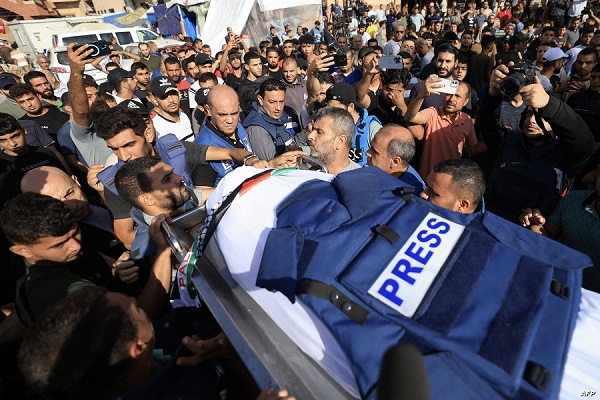
Al Jazeera condemned the attack as a “deliberate and blatant assault on press freedom,” confirming that the group was targeted by an Israeli drone while sheltering in a tent adjacent to the hospital. The Israeli army later acknowledged it had targeted Anas Al-Sharif, claiming he was affiliated with Hamas, an allegation Al Jazeera and press freedom organizations have strongly rejected.
A Voice Silenced
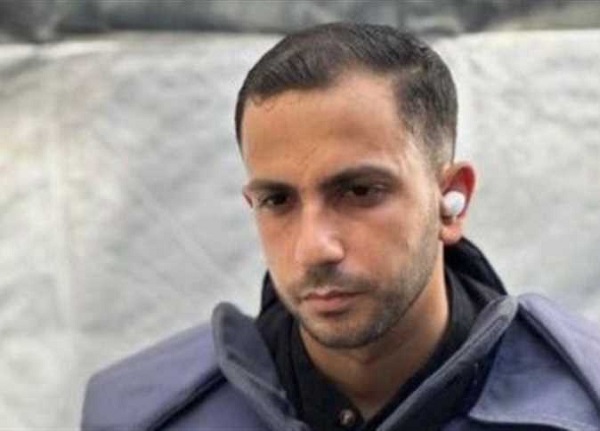
Anas Al-Sharif, 28, was among the most prominent local voices covering the war for an international audience, providing real-time updates from the heart of Gaza’s devastation. His last posts on social media painted a chilling picture of the siege:
“Non-stop bombardment… the Israeli aggression is intensifying in Gaza City,” he wrote on X (formerly Twitter) shortly before the attack. In earlier posts, he described the use of “fire belts” — a tactic involving intensive shelling — on Gaza’s eastern and southern neighborhoods.
Al-Sharif, who was born in Jabalia refugee camp in 1996, was married and a father to two young children, Salah and Sham. He had previously reported that his home was destroyed in a prior airstrike and that his 90-year-old father was killed in December 2023 after the family received direct threats from Israeli military officers.
Despite the risks, Al-Sharif remained committed to his mission. “I will not stop telling the truth, even if it costs me my life,” he told the Committee to Protect Journalists (CPJ) just weeks before his death.
Warnings Ignored
His murder comes amid mounting concern from international organizations over Israel’s targeting of media workers in Gaza. On July 24, the CPJ issued a warning that Al-Sharif was facing a coordinated defamation campaign by the Israeli military, which they feared was a precursor to an assassination. The group pointed to repeated accusations by Israeli military spokesperson Avichay Adraee, who publicly claimed Al-Sharif was a Hamas member an assertion unsupported by any independent evidence.
“Since appearing in tears on air while covering the famine in Gaza, Anas has been relentlessly targeted by the Israeli military’s online campaigns,” said Sherif Mansour, CPJ’s Middle East and North Africa program coordinator. “This deliberate vilification of a journalist is deeply alarming.”
United Nations Special Rapporteur on freedom of opinion and expression, Irene Khan, also condemned the threats and allegations against Al-Sharif, stating they put his life in danger and violated international norms protecting journalists.
A Systematic Campaign Against the Press
Al-Sharif is the seventh Al Jazeera journalist killed in Gaza during the ongoing war. According to the International Federation of Journalists (IFJ), a staggering 238 journalists have been killed in Gaza over the past two years a toll that exceeds the number of media casualties recorded during both World Wars.
“These are not isolated incidents; this is a systematic campaign to silence eyewitnesses to war crimes,” said Essam Abu Bakr, a member of the IFJ. “The Israeli military has openly admitted to targeting journalists, and that admission alone is grounds for legal accountability before international courts.”
Abu Bakr added that Israel’s refusal to allow foreign press into Gaza forced news agencies to rely on local journalists like Al-Sharif, who paid the ultimate price for bringing the world closer to the ground reality. “To claim that this is about protecting journalists while simultaneously killing them is a blatant contradiction,” he said during an interview with Cairo News.
Calls for Accountability
Al Jazeera and press freedom advocates are now calling on the international community to investigate the killings as potential war crimes. The IFJ has urged the United Nations to take immediate action to hold Israeli officials accountable, warning that the unchecked targeting of journalists threatens the very foundation of press freedom and humanitarian reporting in conflict zones.
Al-Sharif’s story has come to symbolize the peril journalists face in war zones and the price they often pay for bearing witness.
“This tragedy is not just about the loss of one journalist,” said Sarah Qaddah, regional director for the CPJ. “It’s about the systematic dismantling of journalism in Gaza. When journalists are killed with impunity, truth itself becomes a casualty.”
As Gaza continues to reel under bombardment, and the international community grapples with how to respond, the killing of Anas Al-Sharif serves as a harrowing reminder of the dangers journalists face and the urgent need for protection and accountability.
