

Ahmed Kamel – Egypt Daily News
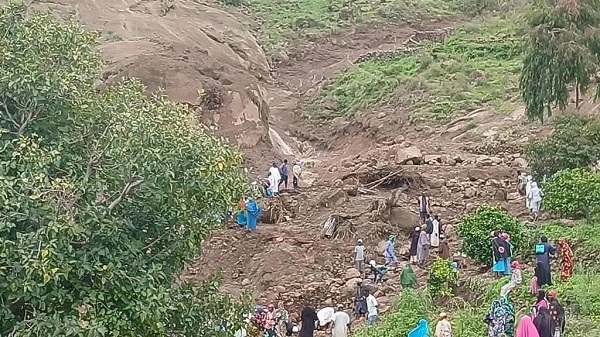
A massive landslide has wiped out an entire village in Sudan’s Darfur region, killing nearly a thousand people and leaving only one known survivor, according to statements by local authorities and rebel groups. The disaster struck the remote village of Tarsin in the Jebel Marra area of Central Darfur, following days of torrential rainfall.
In a statement released Tuesday, the Sudan Liberation Movement (SLM) confirmed that the landslide buried the village beneath tons of earth and rock, describing the catastrophe as total and unprecedented. “The entire population has perished, except for one survivor who miraculously escaped,” said Abdelrahman Al-Nayer, spokesperson for the group. He added that ongoing rescue efforts are hampered by the remoteness of the region and the complete destruction of the village.
“Only a few bodies have been recovered so far,” Al-Nayer explained. “The village has been entirely erased from the map. Rescue operations are underway, but local teams lack the necessary equipment and capabilities.”
Jebel Marra, known for its rugged mountain terrain and difficult access, has long posed challenges for both humanitarian work and travel. The heavy rainfall triggered the collapse of hillsides, overwhelming homes and leaving no time for evacuation. According to local sources, neighboring villages now live in fear of further landslides, as rain continues to fall across the region.
The disaster has prompted urgent appeals from both local leaders and international observers. Darfur Regional Governor Minni Arko Minnawi called on global humanitarian organizations to intervene swiftly, warning of the scale of the devastation. “What happened in Tarsin is a humanitarian catastrophe that goes beyond the borders of the region,” Minnawi said in a post on the social media platform X (formerly Twitter). “We have lost a large number of our people in a natural disaster of unimaginable scale.”
The Sudanese Displaced Persons Coordination Committee also confirmed the severity of the situation, saying that search-and-rescue teams are struggling due to a lack of equipment and access. Without heavy machinery, the possibility of retrieving more victims or finding potential survivors remains slim.
News agency Reuters also reported that over 1,000 people are believed to have died in the collapse, reiterating that only one survivor has been identified so far. The agency noted the ongoing risk of further disasters due to unstable geological conditions and the continued presence of seasonal rains.
Local communities, already strained by years of conflict, displacement, and economic hardship, now face the added burden of a natural disaster with little immediate support. The Sudan Liberation Movement, along with regional officials, has called on the United Nations and international aid agencies to provide emergency assistance to recover bodies, support survivors, and prevent further tragedies in the area.
This landslide is one of the deadliest natural disasters in recent memory in the region and adds to the long list of humanitarian crises affecting Sudan, a country already reeling from civil conflict and widespread displacement.
As the rains show no sign of relenting, the fate of other vulnerable villages in the mountainous region remains uncertain, underscoring the urgent need for preventive measures and sustainable disaster response infrastructure.
