

Ahmed Kamel – Egypt Daily News
Egypt is rapidly emerging as a regional hub for information technology outsourcing and offshoring, drawing in global companies seeking cost-efficient, scalable alternatives to traditional service markets and generating tens of thousands of new jobs in the process.
Over the past three years, multinational firms have increasingly shifted customer service, software development, human resources, and back-office operations to Egypt, capitalizing on the country’s strategic location, expanding digital workforce, and government-backed incentives. The trend is reshaping Egypt’s services economy and strengthening its role as an exporter of technology-enabled services.
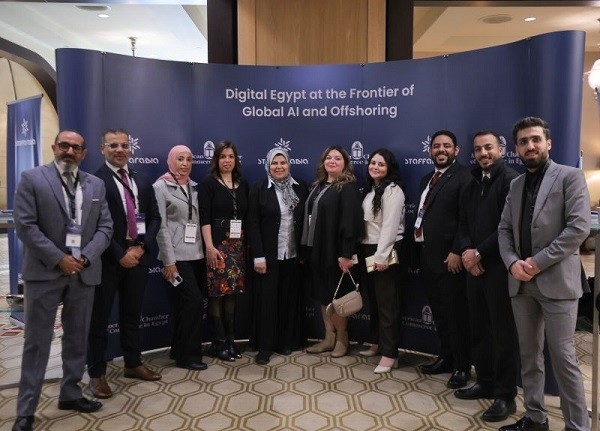
“Egypt has a lot to offer,” said Iyad Hafez, chief executive officer of Staff Arabia Group, which provides HR offshoring and outsourcing services across the Middle East and North Africa. He pointed to Egypt’s time-zone alignment with Europe and the Middle East, its large pool of multilingual talent, and competitive operating costs. “Add to that strong government support and favorable taxation, and the country becomes very attractive for global firms.”
Industry estimates suggest that recent agreements signed by foreign investors, mostly in outsourcing and offshoring are expected to create around 75,000 jobs over the next three years. Some deals involve multinational companies expanding existing operations in Egypt, while others mark first-time investments.
“Some of them are expanding, some are new investors entering the Egyptian market,” said Mayada Maged, managing partner at Staff Arabia Group. “This growth reflects close collaboration between the government, national authorities, and private investors who increasingly view Egypt as a stable and reliable destination.”
The expansion is closely aligned with Egypt’s Vision 2030 strategy, which places the information and communications technology sector at the core of long-term economic development. Authorities have invested heavily in digital infrastructure, technology parks, and specialized training programs, aiming to position Egypt as a competitive exporter of IT and business process services.
“Egypt has been designing strategies and action plans to enhance the role of IT in the economy,” said Yomna Al Hamaky, a professor of economics at Ain Shams University. She noted that a major focus has been on training and upskilling young people to meet global market demands. While challenges remain particularly related to internet speed and infrastructure, she said targeted measures are already underway to address these gaps.
Industry executives say the offshoring boom is delivering tangible macroeconomic benefits, especially through foreign currency inflows at a time when Egypt is seeking to strengthen external balances.
“Today, Egypt is exporting not only products but also services,” Hafez said. “Hard currency is flowing into the country through salaries, operating expenses, office leases, and service contracts. This is having a clear positive impact on the economy.”
Official data highlights the sector’s rapid rise. Offshoring revenues have doubled from about $2.4 billion in 2022 to roughly $4.8 billion in 2025, now accounting for nearly six percent of Egypt’s gross domestic product, up from 3.2 percent in 2018. The government has set an ambitious target to quadruple digital exports by 2030, banking on continued global demand for remote and hybrid service delivery models.
As multinational companies diversify their global operations and seek resilience amid geopolitical and cost pressures, analysts say Egypt’s IT and offshoring sector is well positioned to capture a growing share of the market. If infrastructure upgrades and skills development keep pace with demand, the sector could become a cornerstone of Egypt’s economic transformation in the coming decade.
